
Key Takeaways
- Ocean zones are distinct layers defined by light, temperature, and pressure, shaping unique marine ecosystems globally.
- Only 28.7% of the global seafloor has been mapped with modern high-resolution technology as of April 2026, according to Sea Mystics (2026).
- In 2025, the Ocean Census initiative identified 1,121 previously unknown marine species, greatly expanding our understanding of marine biodiversity.
- The Hadalpelagic zone, Earth’s deepest frontier, houses life adapted to extreme pressure and perpetual darkness.
- The UN’s Kunming-Montreal Global Biodiversity Framework aims to conserve 30% of global land, waters, and seas by 2030, according to Marine Conservation Institute (2026).
Have you ever wondered what lies beneath the ocean’s shimmering surface, or how marine life thrives in unimaginable depths? This **Ocean Zones Explained Beginner’s Guide 2026** will take you on an incredible journey through Earth’s largest habitat, revealing the distinct layers of our oceans and the extraordinary creatures that call them home. You’ll gain a foundational understanding of oceanography, marine biology, and the critical importance of these vast, interconnected ecosystems.
Quick Answer: Ocean zones are distinct layers categorized by light penetration, temperature, and pressure, shaping unique marine ecosystems. From the sunlit surface (Epipelagic) to the crushing depths of trenches (Hadalpelagic), each zone harbors specialized life adapted to its extreme conditions, forming Earth’s largest habitat.
What Are the Main Ocean Zones, and How Do They Differ in 2026?
The main ocean zones are distinct vertical layers of the ocean, primarily differentiated by the amount of sunlight they receive, their temperature, and the immense pressure found at increasing depths. This **Ocean Zones Explained Beginner’s Guide 2026** helps clarify these critical distinctions that shape marine life adaptations.
These zones create diverse underwater ecosystems, each supporting specialized marine life adapted to its unique conditions, according to the Woods Hole Oceanographic Institution (WHOI).
The ocean is broadly divided into two main realms: the pelagic zone, which is the open water column, and the benthic zone, which encompasses the seafloor. Within the pelagic zone, scientists further categorize it into five primary layers based on light penetration:
- Epipelagic Zone (Sunlight Zone): From the surface down to approximately 200 meters (660 feet), this zone receives ample sunlight for photosynthesis.
- Mesopelagic Zone (Twilight Zone): Extending from 200 to 1,000 meters (660 to 3,300 feet), where sunlight rapidly diminishes, allowing only faint light to penetrate.
- Bathypelagic Zone (Midnight Zone): From 1,000 to 4,000 meters (3,300 to 13,100 feet), this zone is characterized by complete darkness.
- Abyssopelagic Zone (Abyssal Zone): Reaching from 4,000 to 6,000 meters (13,100 to 19,700 feet), it covers the vast abyssal plains of the deep ocean.
- Hadalpelagic Zone (Hadal Zone): Found in ocean trenches, extending from 6,000 meters (19,700 feet) down to the deepest points, like the Mariana Trench.
Each of these ocean layers characteristics presents unique challenges and opportunities for marine life, making a comprehensive **Ocean Zones Explained Beginner’s Guide 2026** essential for understanding biodiversity.

The Sunlight Zone (Epipelagic): Life at the Surface
The Sunlight Zone, or Epipelagic zone, is the uppermost layer of the ocean, extending from the surface down to about 200 meters (660 feet), characterized by abundant sunlight that supports photosynthesis. This zone is arguably the most familiar part of the ocean, teeming with life and serving as the foundation of the marine food web.
Approximately 90% of all marine life inhabits the Epipelagic zone, according to Oceana (2024), making it the most productive of all ocean layers explained.
Here, phytoplankton thrive, converting sunlight into energy and forming the base of the food chain. This rich primary production supports a vast array of marine life, from microscopic zooplankton to massive whales. Understanding this zone is crucial for any **Ocean Zones Explained Beginner’s Guide 2026**.
Characteristics of the Sunlight Zone
- Light: Full sunlight penetration allows for photosynthesis.
- Temperature: Warmest and most variable temperatures, influenced by solar radiation and currents.
- Pressure: Relatively low pressure compared to deeper zones.
- Nutrients: Generally nutrient-rich due to upwelling and river runoff.
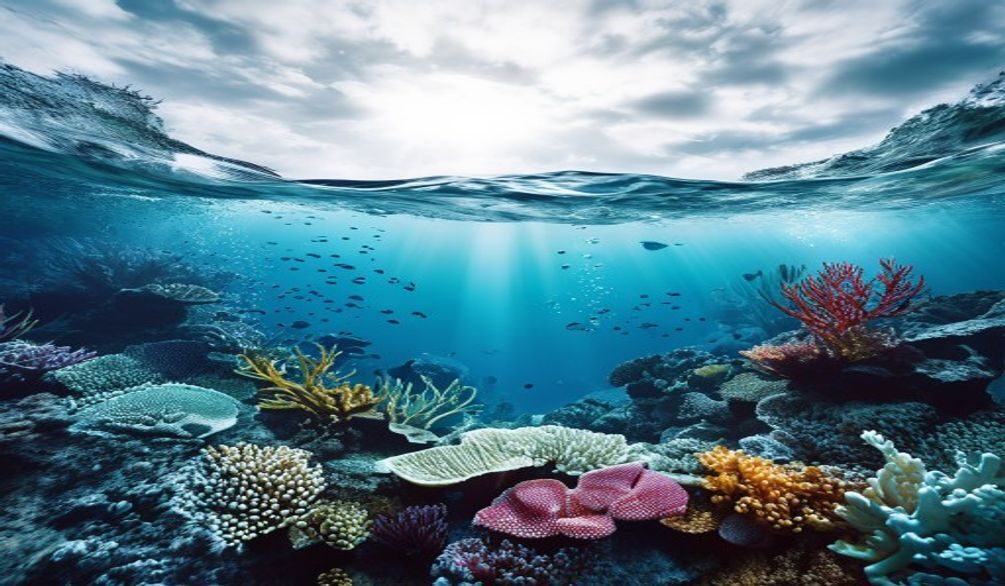
Marine life adaptations in this zone include streamlined bodies for fast swimming, countershading for camouflage against predators from above and below, and efficient reproductive strategies. Iconic creatures like dolphins, tuna, sharks, and sea turtles are common here. This zone is also where you find coral reefs, which are among the most biodiverse ecosystems on Earth. The global ocean surface temperature in 2024 was 0.97°C warmer than the 20th-century average, according to the World Economic Forum (2025), highlighting a significant shift in this vital zone.
The Twilight Zone (Mesopelagic): Exploring the Gloom and Its Inhabitants
The Twilight Zone, known as the Mesopelagic zone, is the ocean layer found between 200 and 1,000 meters (660 to 3,300 feet) deep, where only faint, filtered sunlight penetrates, creating a perpetually dim environment. This reduced light significantly impacts the marine life adaptations found here.
Many creatures in the Mesopelagic zone undergo a daily vertical migration, traveling to the surface to feed at night and returning to the depths during the day to avoid predators, a phenomenon involving billions of organisms, according to NOAA Ocean Exploration (2026).
This zone is a world of shadows and mystery, where animals have evolved incredible adaptations to survive with minimal light. Learning about it is a key part of any **Ocean Zones Explained Beginner’s Guide 2026**.
Life in the Mesopelagic Zone
Animals here often possess large eyes to capture what little light is available, or they produce their own light through bioluminescence. Edith Widder, a marine biologist, notes, “It’s a little-appreciated fact that most of the animals in our ocean make light.”
- Bioluminescence: Essential for communication, attracting mates, luring prey, and deterring predators.
- Large Eyes: Maximizing light capture is critical for vision in low light.
- Vertical Migration: A common strategy for feeding and predator avoidance, moving between the Epipelagic and Mesopelagic zones.
Typical inhabitants include lanternfish, hatchetfish, squid, and various jellyfish. These deep sea creatures by zone show remarkable evolutionary paths. The pressure in ocean zones explained here can reach up to 1,470 pounds per square inch, requiring robust bodies or special adaptations like gelatinous tissues. This **Ocean Zones Explained Beginner’s Guide 2026** details how these creatures thrive in such challenging conditions.

The Midnight Zone (Bathypelagic) and Abyssal Zone (Abyssopelagic): Deep Sea Mysteries Revealed
The Midnight Zone (Bathypelagic) and Abyssal Zone (Abyssopelagic) represent the vast, perpetually dark, and cold regions of the deep sea, where sunlight never penetrates and life relies on chemosynthesis or falling organic matter from above. These zones are crucial for understanding the full scope of marine ecosystems in an **Ocean Zones Explained Beginner’s Guide 2026**.
The abyssal zone alone covers around 83% of the total area of the ocean, making it the Earth’s largest single habitat, according to Cape Clasp (2021).
Life here is sparse but highly specialized, enduring immense pressure and near-freezing temperatures. The deep sea exploration 2026 initiatives continue to uncover new species and behaviors in these mysterious depths.
Bathypelagic Zone (Midnight Zone)
This zone, from 1,000 to 4,000 meters (3,300 to 13,100 feet), is characterized by complete darkness. Organisms here produce their own light (bioluminescence) for hunting or attracting mates, as no sunlight is available. The temperature ranges in ocean layers here are consistently cold, typically 2-4°C (35-39°F). Predators often have huge mouths and sharp teeth to capture any rare food opportunities. The **Ocean Zones Explained Beginner’s Guide 2026** emphasizes the resourcefulness of life in this zone.
Abyssopelagic Zone (Abyssal Zone)
Below the Midnight Zone, from 4,000 to 6,000 meters (13,100 to 19,700 feet), lies the Abyssal Zone, encompassing the abyssal plains. This is a cold, dark, and high-pressure environment. Most food comes from “marine snow” – dead organic matter drifting down from shallower zones. Creatures like sea cucumbers, brittle stars, and various deep-sea fish are found here, adapted with slow metabolisms and often soft bodies to withstand the pressure. This **Ocean Zones Explained Beginner’s Guide 2026** notes the unique challenges of survival in such extreme conditions.

The Hadal Zone (Hadalpelagic): Earth’s Deepest Frontier
The Hadal Zone, or Hadalpelagic zone, is the deepest part of the ocean, found exclusively within the extreme confines of oceanic trenches, extending from 6,000 meters (19,700 feet) down to the deepest known point, the Challenger Deep in the Mariana Trench at nearly 11,000 meters. This section of our **Ocean Zones Explained Beginner’s Guide 2026** explores this ultimate frontier.
Less than 0.001% of the deep ocean seafloor has been seen by human eyes, an area roughly the size of Rhode Island, according to a May 2025 study in Science Advances, with the Hadal Zone being the least explored.
The pressure in ocean zones explained at these depths can exceed 1,100 times that at the surface, posing immense challenges for life. Yet, life persists, demonstrating incredible resilience and unique evolutionary pathways. The hadal zone discoveries are continually pushing the boundaries of what we thought possible for life on Earth. This **Ocean Zones Explained Beginner’s Guide 2026** highlights these marvels.
Life in the Hadal Zone
Despite the extreme conditions, the Hadal Zone supports unique deep sea creatures by zone, primarily invertebrates such as amphipods, sea cucumbers, and various types of worms. These organisms have evolved specific adaptations:
- Pressure-resistant proteins: Specialized enzymes and cellular structures prevent proteins from denaturing under extreme pressure.
- Slow metabolism: Conserving energy in a food-scarce environment.
- Detritus feeders: Relying on organic matter that sinks into the trenches.
Expeditions by entities like the Schmidt Ocean Institute have revealed fascinating ecosystems in these trenches, including unique microbial communities and highly specialized multicellular animals. This **Ocean Zones Explained Beginner’s Guide 2026** is continuously updated with such groundbreaking findings.

Latest Ocean Exploration Technology & Discoveries in 2026
Ocean exploration technology in 2026 is rapidly advancing, enabling scientists to venture into previously inaccessible deep-sea environments and uncover new species and ecosystems at an unprecedented rate. These technological leaps are transforming our understanding, making this **Ocean Zones Explained Beginner’s Guide 2026** more comprehensive than ever.
As of April 2026, only 28.7% of the global seafloor has been mapped with modern high-resolution technology (multibeam sonar systems), according to Sea Mystics (2026), indicating vast areas still await discovery.
The pace of discovery is accelerating, thanks to innovations in remotely operated vehicles (ROVs), autonomous underwater vehicles (AUVs), and advanced imaging systems. Organizations like NOAA Ocean Exploration and the Schmidt Ocean Institute are at the forefront of these efforts.
Key Technological Advancements
- Advanced ROVs and AUVs: Vehicles like the Schmidt Ocean Institute’s ROV SuBastian and those deployed by NOAA Ocean Exploration are equipped with high-definition cameras, manipulators, and sampling tools, allowing for detailed observation and collection in extreme depths.
- AI and Machine Learning: AI is increasingly used for analyzing vast datasets of imagery and sonar data, speeding up the identification of new species and mapping of underwater ecosystems.
- Non-invasive Imaging: Instruments like DeepPIV and EyeRIS, developed by the Bioinspiration Lab at Monterey Bay Aquarium Research Institute (MBARI), create 3D images of marine animals without disturbing them, aiding new species identification.
In 2025, researchers working through the Ocean Census initiative identified 1,121 previously unknown marine species, according to Ocean Census (2026), including a new “Ghost Shark” Chimaera. This monumental effort showcases the power of collaborative deep sea exploration 2026. A recent Schmidt Ocean Institute expedition off Brazil in 2026 discovered over two dozen new marine species in the midwater, further enriching our **Ocean Zones Explained Beginner’s Guide 2026**.

Human Impact & Conservation Efforts Across Ocean Zones in 2026
Human activities exert significant pressure across all ocean zones, from plastic pollution in the Epipelagic to the threat of deep-sea mining in the Abyssal and Hadal zones, necessitating urgent and comprehensive marine conservation initiatives in 2026. This **Ocean Zones Explained Beginner’s Guide 2026** would be incomplete without addressing these critical issues.
Peter Thomson, the UN Secretary-General’s Special Envoy for the Ocean, warned in May 2025 that “We cannot keep pretending we’re safeguarding the ocean while over-exploiting it for the sake of short-term profits,” underscoring the urgency of ocean protection.
Conservation challenges deep sea environments face are particularly complex due to their remoteness and the slow growth rates of deep-sea organisms. Understanding these impacts is crucial for effective stewardship of our oceans. This **Ocean Zones Explained Beginner’s Guide 2026** aims to raise awareness of these challenges.
Impacts and Initiatives by Zone
- Epipelagic Zone: Suffers most from plastic pollution, overfishing, and ocean acidification effects. Conservation efforts include stricter fishing quotas, marine protected areas (MPAs), and global campaigns to reduce plastic waste.
- Mesopelagic Zone: Increasingly threatened by midwater trawling and potential future fisheries targeting mesopelagic species for aquaculture feed. Research by Woods Hole Oceanographic Institution (WHOI) is crucial for understanding these impacts before exploitation escalates.
- Bathypelagic, Abyssopelagic, and Hadal Zones: Face threats from deep-sea mining for valuable minerals, which could destroy fragile, slow-growing ecosystems. Conservation challenges deep sea habitats face include establishing protected areas and developing international regulations for mining.
The UN’s Kunming-Montreal Global Biodiversity Framework’s Target 3 aims to conserve 30% of global land, waters, and seas by 2030, according to Marine Conservation Institute (2026), providing a crucial framework for marine conservation. In 2025, Chile implemented management plans for three huge MPAs, significantly increasing its protected marine area. Dr. Michelle Taylor, Head of Science at Ocean Census, stated in May 2026, “With many species at risk of disappearing before they are even documented, we are in a race against time to understand and protect ocean life.” This highlights the urgency for continued research and conservation, a core message of this **Ocean Zones Explained Beginner’s Guide 2026**.

The Interconnectedness of Ocean Zones & Climate Change in 2026
The interconnectedness of ocean zones means that changes in one layer, particularly those driven by climate change, have cascading effects throughout the entire marine ecosystem, impacting everything from surface productivity to the deepest trenches. This understanding is vital for a complete **Ocean Zones Explained Beginner’s Guide 2026**.
Ocean acidification, caused by increased absorption of atmospheric CO2, is making ocean waters more corrosive, threatening calcifying organisms from the surface to the deep sea, according to NOAA (2025).
Climate change is not just a surface phenomenon; its influence penetrates every ocean layer, altering temperatures, currents, and chemistry, and posing profound threats to marine life. This **Ocean Zones Explained Beginner’s Guide 2026** emphasizes the holistic nature of ocean health.
How Climate Change Impacts Ocean Zones
- Ocean Warming: The global ocean surface temperature in 2024 was 0.97°C warmer than the 20th-century average, according to the World Economic Forum (2025). This warming impacts surface currents, stratification, and the distribution of species, leading to shifts in marine life adaptations.
- Ocean Acidification: Increased CO2 absorption lowers ocean pH, making it harder for shell-building organisms (from corals to pteropods) to form and maintain their shells, affecting food webs across all pelagic and benthic zones.
- Deoxygenation: Warmer waters hold less oxygen, and changes in ocean circulation can lead to expansion of oxygen minimum zones, suffocating marine life in intermediate depths, particularly in the Mesopelagic and Bathypelagic zones.
The flow of energy and nutrients from the Epipelagic zone sustains life in the deeper layers, meaning that disruptions at the surface have profound impacts below. For example, changes in phytoplankton blooms due to warming directly affect the amount of “marine snow” reaching the Abyssal and Hadal zones. Sylvia Earle, a renowned marine biologist, eloquently states, “Diversity in the oceans is even greater [than rainforests],” highlighting the immense biological wealth at risk. This **Ocean Zones Explained Beginner’s Guide 2026** underscores the urgent need for global action against climate change to protect these vital interconnected systems.

Frequently Asked Questions
What are the 5 zones of the ocean?
The five main pelagic zones of the ocean are the Epipelagic (Sunlight), Mesopelagic (Twilight), Bathypelagic (Midnight), Abyssopelagic (Abyssal), and Hadalpelagic (Hadal) zones. These distinct layers are characterized by varying light, temperature, and pressure conditions, according to the Woods Hole Oceanographic Institution (WHOI). Understanding these zones is fundamental to marine biology.
What is the deepest zone of the ocean called?
The deepest zone of the ocean is called the Hadalpelagic zone, or Hadal Zone, found within oceanic trenches like the Mariana Trench. This zone extends from 6,000 meters down to nearly 11,000 meters, supporting unique life adapted to extreme pressure, according to NOAA Ocean Exploration (2026). It remains the least explored and most challenging environment on Earth.
What is the shallowest ocean zone called?
The shallowest ocean zone is the Epipelagic zone, also known as the Sunlight Zone, extending from the surface down to approximately 200 meters (660 feet). This zone receives ample sunlight for photosynthesis and supports the vast majority of marine life, according to Oceana (2024). It is the most productive and biodiverse ocean layer.
What is the main difference between ocean zones?
The main difference between ocean zones lies in their distinct physical characteristics: light penetration, temperature, and pressure, which decrease or increase significantly with depth. These environmental gradients dictate the types of marine life adaptations found in each zone, according to Schmidt Ocean Institute (2026). Each zone is a unique ecosystem with specialized inhabitants.
How does light affect marine life depth?
Light profoundly affects marine life depth by determining the presence of photosynthesis, which forms the base of the food web in the shallow Epipelagic zone. Below 200 meters, in the Mesopelagic and deeper zones, organisms adapt to low or no light through large eyes, bioluminescence, or reliance on detritus, according to Sylvia Earle (2024). This fundamental factor shapes marine life distribution and evolution.