
Key Takeaways
- The global Artificial Neural Networks (ANN) market is projected to reach US$ 315.7 million in 2026, according to DataM Intelligence (2026).
- Neural networks are computational models inspired by the human brain, designed to recognize patterns and learn from data.
- The neural network software market is expected to grow from $52.25 billion in 2026 to $133.48 billion by 2030, according to Research and Markets (2026).
- Key components include neurons, layers (input, hidden, output), weights, biases, and activation functions.
- Ethical considerations like bias and privacy are crucial in developing and deploying neural networks responsibly.
Are you ready to demystify the technology that’s reshaping our world? This **AI Neural Networks Beginner’s Guide 2026** provides a clear, accessible introduction to artificial neural networks, explaining their core concepts and practical applications. You’ll gain the foundational knowledge needed to understand this transformative field, making complex ideas simple and actionable.
Quick Answer: AI neural networks are computational models inspired by the human brain, designed to recognize patterns and learn from data. They use interconnected artificial neurons to process information, enabling AI systems to perform complex tasks.
What Are AI Neural Networks? A 2026 Overview
AI neural networks are computational models that draw inspiration from the human brain’s structure and function, designed to recognize patterns and learn from vast amounts of data. The global Artificial Neural Networks (ANN) market is projected to reach US$ 315.7 million in 2026, according to DataM Intelligence (2026). These networks are fundamental to modern artificial intelligence, enabling machines to perform tasks that once required human-like intelligence.
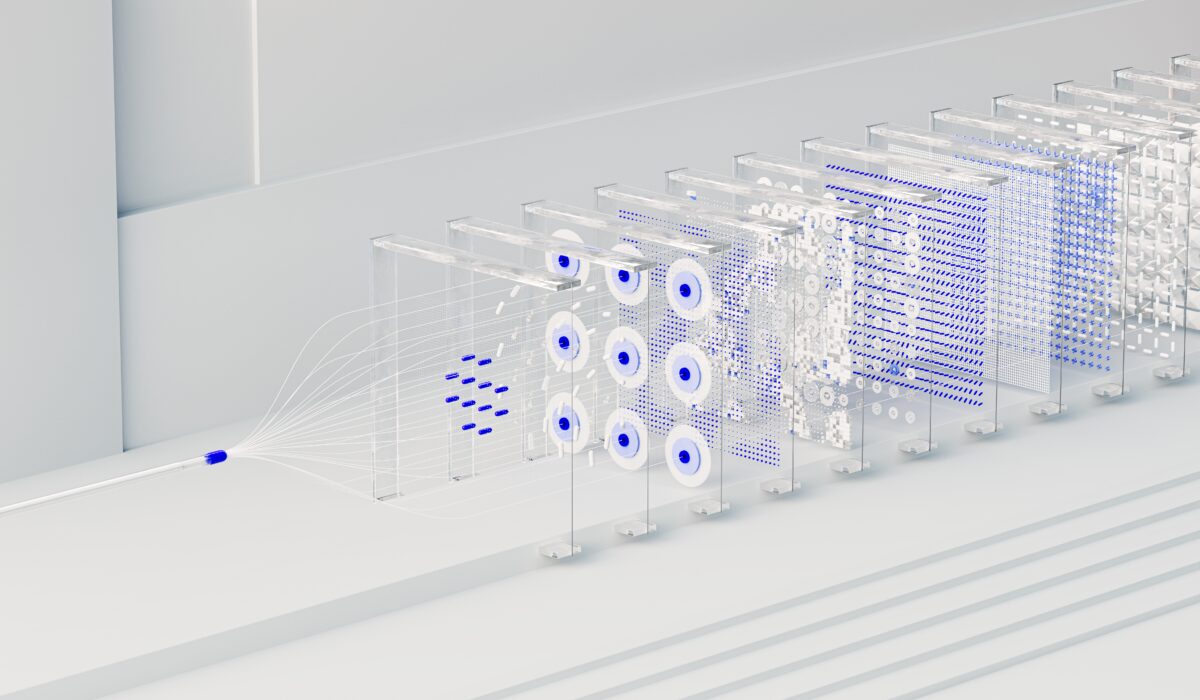
They consist of interconnected nodes, or “neurons,” organized in layers. Each neuron processes incoming data and passes it to subsequent layers, ultimately leading to an output, such as a prediction or classification. This complex interplay allows for sophisticated pattern recognition.
The core idea behind an AI neural network is to simulate how biological neurons communicate. Pioneering computer scientist Geoffrey Hinton, often referred to as the “Godfather of Deep Learning,” made significant breakthroughs with his 1986 paper on backpropagation, which is critical for training these multi-layer networks. Understanding this foundational work is key to grasping the power of an **AI Neural Networks Beginner’s Guide 2026**.
How Do Neural Networks Learn and Function?
Neural networks learn by adjusting the connections between their artificial neurons through a process called training, typically involving large datasets and iterative refinement. This learning mechanism allows them to identify complex patterns and relationships within data, a capability essential for modern AI applications. The neural network software market is projected to grow from $52.25 billion in 2026 to $133.48 billion by 2030, reflecting the increasing demand for these intelligent systems, according to Research and Markets (2026).
The learning process can be broken down into two main phases: feedforward and backpropagation. During the feedforward pass, data moves from the input layer, through hidden layers, and finally to the output layer, where a prediction is made.
* **Feedforward:** Information flows in one direction, activating neurons sequentially. Each neuron processes its input, applies an activation function, and passes the result to the next layer. This is how the network makes its initial “guess” or prediction.
* **Backpropagation:** After a prediction is made, it’s compared to the actual target output. The error is then calculated and propagated backward through the network. This error signal is used to adjust the weights and biases of each connection, minimizing future prediction errors. This iterative adjustment is how neural networks learn over time, making them increasingly accurate.
Andrew Ng, co-founder of Coursera and DeepLearning.ai, has been instrumental in making deep learning accessible, emphasizing the importance of well-structured training data for effective neural network learning. This continuous learning and refinement process is a cornerstone of any effective **AI Neural Networks Beginner’s Guide 2026**.
The Essential Components of an Artificial Neural Network
The basic components of a neural network include artificial neurons, layers, connections with weights and biases, and activation functions, all working in concert to process information. Each element plays a crucial role in enabling the network to learn and make predictions. Without these fundamental building blocks, the complex computations that define neural networks would not be possible.
Let’s break down these core elements:
* **Neurons (Nodes):** These are the fundamental processing units, analogous to biological neurons. Each neuron receives inputs, performs a simple calculation, and then transmits its output to other neurons.
* **Layers:** Neurons are organized into layers.
* **Input Layer:** Receives the initial data. For instance, in image recognition, each pixel might be an input.
* **Hidden Layers:** These are where the majority of the computation happens. They process the inputs from the previous layer and extract features. A network can have one or many hidden layers, with “deep” learning referring to networks with multiple hidden layers.
* **Output Layer:** Produces the final result, such as a classification (e.g., “cat” or “dog”) or a prediction (e.g., a stock price).
* **Connections (Synapses):** These link neurons from one layer to the next, similar to synapses in the brain. Each connection has an associated weight.
* **Weights:** Numerical values that determine the strength and importance of a connection between neurons. During training, these weights are adjusted to minimize errors.
* **Biases:** Additional parameters added to the output of a neuron, allowing the activation function to be shifted. Biases help the network learn more complex relationships in the data.
* **Activation Functions:** Mathematical equations applied to the output of each neuron in the hidden and output layers. They introduce non-linearity into the network, enabling it to learn and model complex, non-linear patterns. Common activation functions include ReLU, Sigmoid, and Tanh.
Understanding these elements is crucial for anyone exploring an **AI Neural Networks Beginner’s Guide 2026**, as they form the architectural backbone of every neural network.
Different Types of Neural Networks Explained for Beginners
There are various types of neural networks, each optimized for specific tasks, but all share the fundamental principle of learning from data through interconnected nodes. The choice of neural network architecture depends heavily on the problem you’re trying to solve. For example, some are excellent for image processing, while others excel at sequential data like text.
Here are some of the most common types of neural networks:
* **Feedforward Neural Networks (FNNs):** The simplest type, where information flows in only one direction, from input to output, without loops. They are often used for classification and regression tasks.
* **Convolutional Neural Networks (CNNs):** Primarily designed for processing grid-like data, such as images. Yann LeCun, Chief AI Scientist at Meta, pioneered CNNs, enabling machines to recognize images and power much of modern computer vision. They excel at tasks like image recognition, object detection, and facial recognition.
* **Recurrent Neural Networks (RNNs):** Networks with internal memory, allowing them to process sequential data where the output depends on previous computations. They are ideal for natural language processing (NLP), speech recognition, and time series prediction.
* **Long Short-Term Memory (LSTM) Networks:** A special type of RNN designed to overcome the vanishing gradient problem, enabling them to learn long-term dependencies in sequential data more effectively. LSTMs are widely used in advanced NLP tasks.
* **Generative Adversarial Networks (GANs):** Composed of two competing neural networks—a generator and a discriminator. GANs are used for generating new data instances that resemble the training data, such as creating realistic images or art. This is a key area in generative AI and neural networks.
* **Transformer Networks:** A relatively newer architecture, particularly powerful for sequence-to-sequence tasks, often used in large language models (LLMs). They rely on self-attention mechanisms to weigh the importance of different parts of the input sequence.
Each of these types represents a specialized approach within the broader field, offering powerful tools for diverse AI challenges, making them essential knowledge for an **AI Neural Networks Beginner’s Guide 2026**.
Real-World Applications of AI Neural Networks in 2026
AI neural networks are already integrated into countless aspects of daily life and industry in 2026, driving innovation across various sectors from consumer technology to critical infrastructure. The global AI market size is calculated at USD 900.00 billion in 2026, according to Precedence Research (2025), underscoring the widespread adoption and impact of these technologies. From powering your smartphone’s voice assistant to detecting fraudulent transactions, their influence is profound.
Here are some prominent applications:
* **Image Recognition:** Neural networks power applications like Google Photos for identifying and categorizing images, and assist in medical diagnostics by identifying anomalies in scans. This includes identifying tumors in MRI scans or predicting diabetic retinopathy from eye images in healthcare diagnostics.
* **Speech Recognition & Natural Language Processing (NLP):** Systems like Apple’s Siri and Amazon’s Alexa use neural networks to convert spoken language into text. Tools like Google Translate leverage neural networks for accurate language translation, while Grammarly uses them to understand and correct grammar.
* **Autonomous Vehicles:** Companies like Tesla utilize neural networks to process sensor data and make real-time driving decisions for self-driving cars, enabling visual recognition of road signs and other road users. This represents a significant advancement in automotive technology trends 2026.
* **Recommendation Systems:** Platforms such as Netflix and Amazon use neural networks to analyze user preferences and recommend movies, shows, or products, significantly enhancing user experience and engagement.
* **Fraud Detection:** Financial institutions deploy neural networks to detect unusual transaction patterns that may indicate fraudulent activity, protecting consumers and businesses from financial crime.
* **Drug Discovery and Healthcare:** Neural networks accelerate the discovery of new drugs by predicting molecular interactions and optimizing drug design. They also aid in personalized medicine by analyzing patient data for tailored treatments.
The pervasive nature of these applications highlights why an **AI Neural Networks Beginner’s Guide 2026** is more relevant than ever. AI is projected by Cisco to generate 10.2 exabytes of internet traffic per year by 2026, according to WifiTalents (2026), further cementing neural networks as critical infrastructure.
AI, Machine Learning, and Deep Learning: Understanding the Differences
While often used interchangeably, AI, machine learning, and deep learning represent distinct but interconnected concepts within the realm of artificial intelligence. Understanding these differences is crucial for anyone exploring an **AI Neural Networks Beginner’s Guide 2026**. Essentially, AI is the broadest field, with machine learning as a subset, and deep learning as a specialized subset of machine learning that heavily utilizes neural networks.
Here’s a breakdown:
* **Artificial Intelligence (AI):** This is the overarching concept of creating machines that can perform tasks requiring human intelligence. It encompasses everything from simple rule-based systems to advanced cognitive systems. The goal of AI is to enable machines to reason, learn, perceive, understand language, and interact with the world.
* **Machine Learning (ML):** A subset of AI that focuses on enabling systems to learn from data without explicit programming. Instead of being programmed with specific rules, ML algorithms identify patterns and make predictions or decisions based on the data they’ve been trained on. Traditional ML algorithms include linear regression, support vector machines, and decision trees.
* **Deep Learning (DL):** A specialized subset of machine learning that uses multi-layered artificial neural networks to learn complex patterns from data. The “deep” in deep learning refers to the numerous hidden layers within these neural networks, allowing them to process data with many levels of abstraction. Deep learning is responsible for many of the recent breakthroughs in AI, such as advanced image recognition and natural language understanding.
In practice, neural networks are the core engine behind deep learning. Every deep learning model is a neural network, but not every neural network is a deep learning model (some have only one or two layers and might be considered “shallow” neural networks within the broader ML category). This distinction is vital for a clear **AI Neural Networks Beginner’s Guide 2026**.
Ethical Considerations in Neural Network Development
Ethical considerations are paramount in neural network development, addressing potential issues such as bias, privacy, and accountability that can arise from powerful AI systems. As AI technologies become more integrated into society, understanding and mitigating these risks is a critical responsibility for developers and users alike. Stuart Russell, a professor at UC Berkeley, warns about the need for control over artificial general intelligence, highlighting the profound impact of these technologies.
Key ethical areas include:
* **Algorithmic Bias:** Neural networks learn from the data they are trained on. If this data reflects existing societal biases (e.g., historical discrimination), the AI can perpetuate and even amplify these biases in its decisions, leading to unfair or discriminatory outcomes. This is a crucial topic covered in any comprehensive AI Bias Developer Guide 2026.
* **Privacy Concerns:** Training neural networks often requires vast amounts of personal data. Ensuring this data is collected, stored, and used responsibly, with robust privacy safeguards and anonymization techniques, is essential to protect individuals’ information.
* **Transparency and Explainability:** Deep learning models, particularly those with many layers, can be opaque “black boxes,” making it difficult to understand why they make certain decisions. Developing explainable AI (XAI) is vital for building trust and ensuring accountability, especially in critical applications like healthcare or legal judgments.
* **Security and Malicious Use:** Neural networks can be vulnerable to adversarial attacks, where subtle changes to input data can trick the AI into making incorrect classifications. There’s also the risk of these powerful technologies being used for harmful purposes, such as surveillance or autonomous weapons.
* **Job Displacement:** The increasing capabilities of neural networks raise concerns about job displacement as AI automates tasks previously performed by humans. This necessitates societal planning for retraining and new economic models.
Addressing these ethical challenges is not just about compliance; it’s about building responsible and beneficial AI for the future. An **AI Neural Networks Beginner’s Guide 2026** must emphasize these considerations from the outset.
Getting Started: Your Next Steps in Learning Neural Networks in 2026
The best way to get started with learning neural networks in 2026 is to combine theoretical understanding with practical, hands-on experience using accessible tools and platforms. North America is expected to hold a 39.3% market share in the artificial neural network market in 2026, dominating the global market, according to Coherent Market Insights (2026), indicating a robust ecosystem for learning and development. Starting with fundamental concepts and gradually moving to coding and projects will build a strong foundation.
Here are actionable steps for your journey into AI neural networks:
1. **Master the Fundamentals:** Begin with the core concepts covered in this **AI Neural Networks Beginner’s Guide 2026**. Understand what neurons, layers, weights, biases, and activation functions are. Resources like Andrew Ng’s Deep Learning Specialization on Coursera (Coursera) are excellent starting points.
2. **Learn a Programming Language:** Python is the de facto language for AI and machine learning due to its extensive libraries and active community. Focus on mastering its basics and data manipulation libraries like NumPy and Pandas.
3. **Explore AI Frameworks:** Familiarize yourself with popular deep learning frameworks.
* **TensorFlow:** Developed by Google DeepMind, TensorFlow is a comprehensive open-source library for machine learning, offering tools for building and deploying neural networks.
* **PyTorch:** Developed by Facebook’s AI Research lab, PyTorch is another widely used open-source library known for its flexibility and ease of use, especially for research and prototyping.
4. **Hands-on Projects:** Start with small, manageable projects. Implement a simple feedforward neural network from scratch, then move on to using TensorFlow or PyTorch for tasks like image classification (e.g., MNIST dataset) or sentiment analysis. AWS (Amazon Web Services) provides excellent documentation and examples for deploying neural network models (AWS).
5. **Join Online Communities:** Engage with communities on platforms like Kaggle, GitHub, or Reddit. Participating in discussions and competitions can provide invaluable learning opportunities and networking.
6. **Stay Updated:** The field of AI is rapidly evolving. Follow leading researchers like Geoffrey Hinton and Yann LeCun, read reputable AI news sources, and explore new advancements. Consider how these skills align with Future AI Careers 2026.
Consistency is key. Dedicate regular time to learning and practice, and you’ll be well on your way to mastering neural networks.
Frequently Asked Questions
What is a neural network in simple terms?
A neural network is a computer system designed to mimic the human brain’s structure and function, learning from data to recognize patterns and make decisions. It uses layers of interconnected nodes to process information, enabling tasks like image recognition. This complex system is a core component of modern AI.
How do neural networks learn?
Neural networks learn through a process called training, where they adjust the strength of connections (weights) between neurons by comparing their predictions to actual outcomes and propagating the error backward. This iterative refinement, known as backpropagation, allows the network to minimize errors over time. Geoffrey Hinton’s work on backpropagation in 1986 was foundational to this process.
What are the basic components of a neural network?
The basic components of a neural network include input, hidden, and output layers of artificial neurons, along with weighted connections, biases, and activation functions. These elements work together to process data and transform it into a meaningful output. Without these components, the network cannot function or learn effectively.
What are some real-world applications of neural networks?
Neural networks are used in real-world applications such as image recognition (e.g., Google Photos), speech recognition (e.g., Siri, Alexa), autonomous vehicles (e.g., Tesla), recommendation systems (e.g., Netflix), and fraud detection in financial services. These applications demonstrate the pervasive impact of neural networks across various industries in 2026. The global AI market size is calculated at USD 900.00 billion in 2026, according to Precedence Research (2025), driven by such applications.
What is the difference between AI, machine learning, and deep learning?
AI is the broad field of creating intelligent machines, machine learning is a subset of AI that enables systems to learn from data without explicit programming, and deep learning is a specialized subset of machine learning using multi-layered neural networks. Deep learning, powered by neural networks, is responsible for many advanced AI capabilities.