
Key Takeaways
- The global drone market is valued at USD 96.4 billion in 2026, according to Grand View Research (2026).
- Enhanced AI autonomy is a leading innovation, enabling drones like those from Skydio to navigate complex environments independently.
- The drone delivery market is projected to reach $1.47 billion in 2026, per Pilot Institute (2026).
- Advancements in battery technology, including solid-state and hydrogen fuel cells, are crucial for extending drone endurance and operational range.
- The U.S. commercial drone market is estimated at USD 4.26 billion in 2026, showing significant growth, according to Business Research Insights (2026).
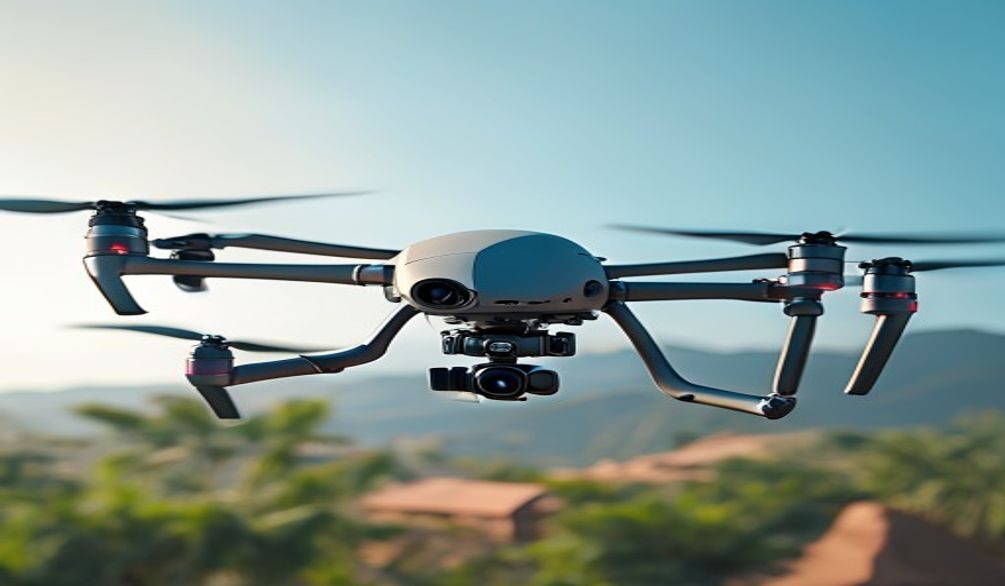
Staying ahead in the rapidly evolving world of uncrewed aerial vehicles means understanding the **Top 5 Drone Innovations 2026**. If you’re looking to identify the crucial technological advancements shaping the drone industry this year, you’ve come to the right place. This article will guide you through the groundbreaking developments that are redefining capabilities, applications, and the future trajectory of drone technology.
Quick Answer: Top 5 drone innovations 2026: enhanced AI autonomy, expanded BVLOS operations, advanced multi-sensor integration, specialized industry solutions, and significant drone delivery network growth. These are driven by regulatory progress and enterprise investment.
What are the Top 5 Drone Innovations to watch in 2026?
The **Top 5 Drone Innovations 2026** encompass significant advancements in autonomy, operational capabilities, data collection, and practical deployment, fundamentally reshaping how drones are used across sectors. These innovations are driving the global drone market, which is projected to grow to USD 96.4 billion in 2026, according to Grand View Research (2026). What most people miss is how these individual advancements are converging to create truly transformative solutions.
Here are the essential picks for the Top 5 Drone Innovations 2026:
- Enhanced AI Autonomy: Drones are no longer just remotely piloted; they are increasingly self-aware and capable of complex decision-making. This includes advanced obstacle avoidance, dynamic path planning, and mission execution with minimal human intervention.
- Expanded Beyond Visual Line of Sight (BVLOS) Operations: Regulatory frameworks are catching up with technology, allowing drones to operate over much greater distances. This unlocks entirely new applications, particularly in logistics, infrastructure inspection, and public safety.
- Advanced Multi-Sensor Integration: Drones are now equipped with a sophisticated array of sensors, including high-resolution thermal, LiDAR, multispectral, and hyperspectral cameras, often combined with real-time processing. This enables unprecedented data capture and analysis for precise applications.
- Specialized Industry Solutions: Instead of general-purpose drones, we’re seeing highly specialized platforms tailored for specific tasks in agriculture, construction, energy, and defense. These solutions offer optimized performance and efficiency for niche requirements.
- Significant Drone Delivery Network Growth: The dream of widespread drone delivery is becoming a reality, with major players rapidly expanding their operational footprints. This innovation is transforming last-mile logistics and access to critical supplies.
These innovations collectively represent a shift from experimental technology to practical, scalable solutions, making the **Top 5 Drone Innovations 2026** a critical area for industry observation. The key insight here is the move towards integrated, intelligent systems that deliver tangible value.
How is AI and autonomy transforming drone technology in 2026?
AI and autonomy are fundamentally transforming drone technology in 2026 by enabling drones to perform complex missions independently, enhancing efficiency, safety, and scalability across numerous applications. This shift is a major component of the **Top 5 Drone Innovations 2026**, allowing for operations that were previously impossible or too costly. The commercial drone market accounts for roughly 70% of total drone market revenue in 2026, a figure largely driven by these autonomous capabilities, according to FACT.MR (2026).
Companies like Skydio are at the forefront of this transformation, with their drones highly acclaimed for their self-navigating capabilities. Skydio’s AI-powered flight systems utilize advanced computer vision to perceive and understand their environment, allowing for autonomous obstacle avoidance and subject tracking, even in GPS-denied environments. This capability is invaluable for enterprise applications such as industrial inspections and public safety, where precision and safety are paramount.
Another significant player in autonomous solutions is Percepto, which offers market-leading drone-in-a-box systems. These fully autonomous units can be deployed on-site to conduct routine inspections and surveillance without human pilots, enabling continuous monitoring of critical infrastructure. Percepto’s solutions exemplify how AI is moving drones from simple data collection tools to integral parts of automated operational workflows.
The integration of AI also facilitates **BVLOS drone regulations 2026** by providing the necessary safety assurances through advanced sense-and-avoid systems. This technological leap means drones can operate beyond the pilot’s line of sight, expanding their utility for long-range inspections of pipelines or power lines. Matt Collins, Content Manager at Commercial UAV News, points out that while AI marketing is prevalent, the actual usage and regulatory progress for BVLOS are now finally starting to converge, marking a “reset button” for the industry in 2026. This makes AI autonomy a cornerstone of the **Top 5 Drone Innovations 2026**.
What are the latest advancements in drone battery technology for 2026?
The latest advancements in drone battery technology for 2026 are focusing on increasing energy density, extending flight times, and improving charging efficiency, which are critical for unlocking the full potential of drone applications. These improvements are a vital, though often overlooked, aspect of the **Top 5 Drone Innovations 2026**. Howard Alt, Co-founder and CEO of Micantis, emphasized that “Drones are America’s Second-Biggest Tech Story. The Battery Is the Plot Hole,” highlighting battery independence as a defining factor for the future of the U.S. drone industry.
One of the most promising areas of development is **solid-state battery technology**. Unlike traditional lithium-ion batteries that use liquid electrolytes, solid-state batteries utilize solid electrodes and electrolytes, offering higher energy density, improved safety, and faster charging times. While still largely in the research and development phase for widespread drone integration, prototypes are showing significant promise for extended endurance.
Another key advancement involves **hydrogen fuel cell technology** for larger, long-endurance drones. Fuel cells convert hydrogen into electricity, offering significantly longer flight times than conventional batteries, often hours rather than minutes. This is particularly beneficial for heavy-lift or long-duration missions such as cargo transport or extensive aerial surveying, where battery limitations have historically been a bottleneck.
Manufacturers are also making incremental improvements to existing lithium-ion battery chemistries, focusing on optimizing cell design and battery management systems. These enhancements lead to better power-to-weight ratios and increased cycle life, directly impacting the operational viability of commercial drones. The continuous drive for better power solutions directly supports the broader adoption of the **Top 5 Drone Innovations 2026**.
Which industries are benefiting most from drone innovations in 2026?
Numerous industries are benefiting significantly from drone innovations in 2026, leveraging enhanced capabilities for improved efficiency, safety, and data collection. These industry-specific applications are a core driver behind the **Top 5 Drone Innovations 2026** and the overall growth of the drone market. The U.S. Commercial Drones Market is anticipated to grow from USD 4.26 billion in 2026 to USD 7.39 billion by 2032, according to Business Research Insights (2026), demonstrating broad industrial impact.
The **logistics and delivery sector** is experiencing revolutionary changes. Zipline International’s P2 drop-pods are a prime example, effectively distributing medical supplies to hard-to-reach areas and offering impressive delivery capabilities to partners like Michigan Medicine. Zipline passed 2 million total commercial deliveries in January 2026, showcasing the scalability of drone delivery, according to their corporate reports (2026). Similarly, Walmart crossed 1 million U.S. drone deliveries by May 29, 2026, running from 66 stores across four states with an average delivery time of 23 minutes, as reported by Pilot Institute (2026). These figures highlight the rapid expansion of **drone delivery services future**.
**Construction and infrastructure inspection** is another major beneficiary, accounting for approximately 23% share in the U.S. commercial drone market in 2026 as the leading end-use segment, according to Business Research Insights (2026). Drones provide rapid, safe, and cost-effective methods for surveying sites, monitoring progress, and inspecting critical assets like bridges, pipelines, and power lines. This reduces human risk and improves data accuracy, making it easier to identify potential issues early.
In **agriculture**, drones equipped with multispectral sensors enable precision farming by monitoring crop health, irrigation needs, and pest infestations. This allows farmers to apply resources more efficiently, reduce waste, and increase yields. AeroVironment, while known for defense applications, also contributes to advanced aerial capabilities that can translate to agricultural surveying. The ability to collect granular data quickly makes them indispensable tools. These diverse applications underscore the practical impact of the **Top 5 Drone Innovations 2026**.
What are the key challenges and regulatory landscapes for drones in 2026?
The key challenges and regulatory landscapes for drones in 2026 primarily revolve around balancing technological innovation with safety, privacy concerns, and the complexities of integrating uncrewed aircraft into existing airspace. These factors significantly influence the widespread adoption and scaling of the **Top 5 Drone Innovations 2026**. The FAA lists 855,860 registered drones in the United States as of early 2026, with 37% being commercial, according to Pilot Institute (2026), highlighting the growing need for clear regulations.
One major challenge is the slow rollout and implementation of **BVLOS drone regulations 2026**. While technology for operating beyond visual line of sight exists, regulatory bodies like the FAA are taking a cautious approach to ensure public safety. This creates a bottleneck for many commercial applications, particularly long-range inspections and large-scale delivery networks. Matt Collins of Commercial UAV News notes that regulatory hurdles are a significant factor in the perceived gap between advanced AI capabilities and their actual operational deployment.
Another significant regulatory development impacting the U.S. market is the December 2025 ban on new foreign drone models. This decision, aimed at national security concerns, significantly affects major players like DJI, which reportedly accounts for ~70% of all drones sold worldwide, according to UAV Coach (2026). DJI estimates over $1.5 billion in losses for 2026 due to the inability to sell new products in the U.S. market (DJI internal estimate, 2026). This creates opportunities for domestic manufacturers like Skydio and AeroVironment but also presents challenges for market diversity and consumer choice.
Beyond regulations, public perception regarding privacy and security remains a challenge. As drones become more autonomous and capable of advanced surveillance, addressing these ethical concerns is crucial for fostering widespread acceptance. The key is developing robust data governance frameworks and ensuring transparent operational practices. Navigating these complex waters is essential for the continued success of the **Top 5 Drone Innovations 2026**.
How do consumer drone innovations compare to enterprise advancements in 2026?
Consumer drone innovations in 2026, while impressive in terms of ease of use and advanced imaging, typically prioritize accessibility and creative applications, whereas enterprise advancements focus on ruggedness, specialized functionality, and regulatory compliance for specific industrial tasks. This distinction is crucial when examining the broader landscape of the **Top 5 Drone Innovations 2026**.
For consumers, innovations are largely driven by companies like DJI, despite the U.S. foreign drone ban impacting new model availability in the market. New consumer drones from DJI, such as the Lito X1 and Avata 360, focus on improved camera quality, longer flight times, and enhanced intelligent flight modes for photography and immersive FPV experiences. These advancements make drones more user-friendly and capable for hobbyists and content creators. The emphasis is on features like advanced camera stabilization, intuitive controls, and compact, foldable designs for portability.
In contrast, enterprise advancements, which are a major component of the **Top 5 Drone Innovations 2026**, are built for performance in demanding environments and integration into complex workflows. Companies like Skydio and Percepto offer robust, highly autonomous systems designed for industrial inspection, public safety, and defense. AeroVironment’s Switchblade Loitering Munitions, for example, have become essential frontline weapons, leading to a funded backlog of $1.1 billion and production scaling to 1,200 units per month in early 2026 to meet NATO demand (AeroVironment Q1 2026 earnings report). These enterprise drones feature specialized payloads (LiDAR, thermal sensors), enhanced durability, and secure communication systems.
The key difference lies in purpose and regulation: consumer drones aim for broad appeal and ease of capture, while enterprise solutions are engineered for specific, high-stakes operational outcomes and must adhere to stricter safety and operational standards. While some consumer-grade features trickle up to enterprise models, the foundational design and capabilities diverge significantly to meet distinct market needs, making both segments vital to the **future of drone technology 2026**.
The Future of Drone Technology: What’s next beyond 2026?
The future of drone technology beyond 2026 promises even greater autonomy, seamless integration into smart city infrastructure, and a stronger emphasis on sustainable solutions, building upon the foundational **Top 5 Drone Innovations 2026**. We are moving towards a future where drones are not just flying cameras but integral components of our daily lives and critical infrastructure.
Expect to see continued advancements in AI, leading to truly self-governing drones capable of collaborating in swarms and performing highly complex tasks without direct human oversight. This will further enable the expansion of **autonomous drones 2026** into more sophisticated roles, such as automated urban deliveries and large-scale environmental monitoring. Peter Karanja, Autonomy Global Ambassador – Africa, highlights the shift from mere adoption to effective, problem-solving integration of drone technology, particularly in areas like conservation.
Furthermore, the integration of drones with 5G/6G networks will unlock real-time data processing and communication capabilities, enabling faster decision-making and more resilient operations. This will be crucial for the widespread adoption of **drone delivery services future** and the development of air taxi services. Innovations in material science will also lead to lighter, more durable, and more energy-efficient drone designs.
Finally, the focus on **sustainable drone solutions 2026** will grow, with research into electric propulsion, hydrogen power, and even solar-powered drones becoming more prominent. The aim is to reduce the environmental footprint of drone operations while maximizing their utility. The journey beyond the **Top 5 Drone Innovations 2026** will be one of increasing sophistication, integration, and sustainability, fundamentally changing our interaction with the airspace.
Frequently Asked Questions
What are the latest innovations in drone technology?
The latest innovations in drone technology include advanced AI autonomy, expanded Beyond Visual Line of Sight (BVLOS) capabilities, sophisticated multi-sensor integration, specialized industry-specific solutions, and significant growth in drone delivery networks. These advancements collectively constitute the **Top 5 Drone Innovations 2026**, driving transformative change across various sectors. The global drone market is valued at USD 96.4 billion in 2026, according to Grand View Research (2026), reflecting these innovative shifts. Staying informed about these changes is key to understanding the market.
What is the future of drone technology in 2026?
The future of drone technology in 2026 is characterized by practical applications of previously theoretical concepts, with a strong emphasis on automation, regulatory progress, and specialized industrial integration. This year marks a period where the **Top 5 Drone Innovations 2026** are moving from research labs to real-world deployment. For example, the drone delivery market is expected to reach $1.47 billion in 2026, per Pilot Institute (2026), indicating a tangible shift towards widespread commercial use. The trend points towards increasingly autonomous and integrated systems.
Which industries are using drones the most in 2026?
In 2026, industries such as construction and infrastructure, logistics and delivery, agriculture, and public safety are using drones the most. Construction & Infrastructure, for instance, accounted for approximately 23% share in the U.S. commercial drone market in 2026 as the leading end-use segment, according to Business Research Insights (2026). These sectors leverage drones for tasks like surveying, inspections, monitoring, and last-mile deliveries, directly benefiting from the **Top 5 Drone Innovations 2026**. Drones offer efficiency, safety, and precision across these demanding applications.
What are the biggest challenges for the drone industry in 2026?
The biggest challenges for the drone industry in 2026 include navigating complex and evolving regulatory landscapes, particularly for Beyond Visual Line of Sight (BVLOS) operations, addressing supply chain disruptions, and managing public perception regarding privacy and security. These challenges directly impact the scalability and widespread adoption of the **Top 5 Drone Innovations 2026**. The U.S. foreign drone ban, for example, is estimated to cause DJI over $1.5 billion in losses for 2026, highlighting the impact of regulatory shifts (DJI internal estimate, 2026). Overcoming these hurdles is essential for continued growth.
Will drones be fully autonomous by 2026?
While significant strides have been made in AI and autonomy, drones will not be fully autonomous in all contexts by 2026; rather, they will operate with enhanced autonomy for specific tasks and environments. The **Top 5 Drone Innovations 2026** show a strong trend towards increased self-navigation and decision-making, but human oversight remains critical for complex or high-risk operations. Companies like Skydio lead in AI-powered flight systems, enabling advanced autonomous operations for enterprise users, but complete autonomy across all scenarios is still a future goal. The progression is gradual and task-specific.