
Key Takeaways
- Coral reefs, covering less than 1% of the seafloor, support at least 25% of all marine species.
- The world’s warm-water coral reefs passed their “tipping point” in late 2025, estimated at 1.2°C global warming.
- The fourth global coral bleaching event (2023-2025) impacted 84% of the world’s coral reef area.
- Coral reefs contribute over $3.4 billion annually to the U.S. economy, according to NOAA (2025 data).
- Innovative technologies like Coral IVF and biomaterials by Hybrid Reefs are accelerating restoration efforts in 2026.
Are you ready to dive deep into the vital underwater worlds that sustain immense marine biodiversity and protect our coastlines? This **Coral Reef Ecosystems Guide 2026** provides an essential, up-to-date understanding of these critical habitats, their current challenges, and the innovative solutions emerging to protect them. You’ll gain expert insights into the science, threats, and conservation efforts shaping the future of coral reefs, empowering you to understand their profound importance.
Quick Answer: Coral reef ecosystems are diverse underwater structures formed by colonies of tiny marine invertebrates called coral polyps, crucial for marine biodiversity, coastal protection, and global economies, facing severe threats in 2026.
What are Coral Reef Ecosystems and Why are They Essential in 2026?
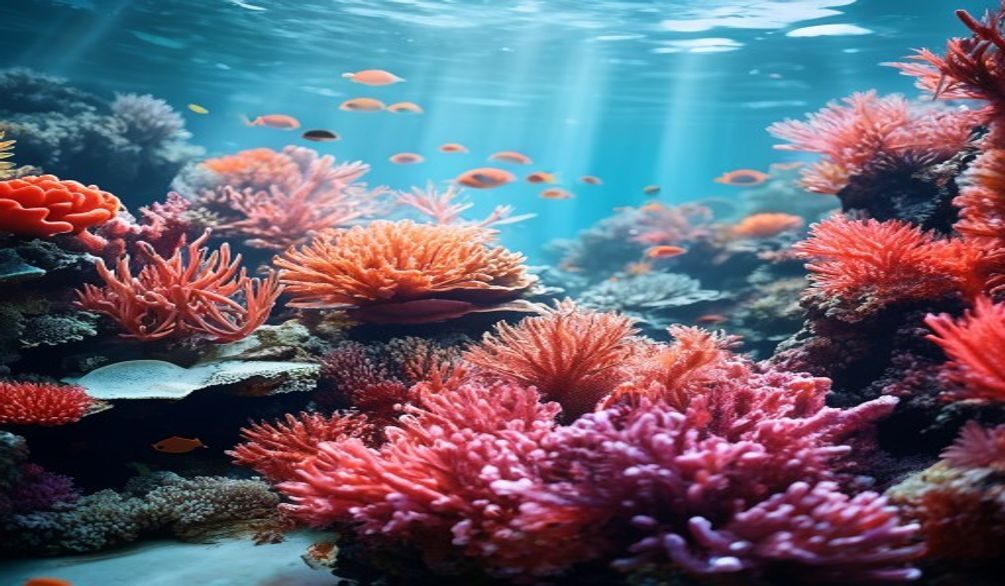
Coral reef ecosystems are intricate underwater habitats built by colonies of tiny marine invertebrates known as coral polyps, which secrete calcium carbonate to form hard, stony structures. These living structures are essential in 2026 because they are biodiversity hotspots, provide crucial coastal protection, and underpin significant global economies. They are often called the “rainforests of the sea” due to their incredible species richness.
These ecosystems, though covering less than 1% of the seafloor, support at least 25% of all marine species, according to the U.S. Environmental Protection Agency (2025). This biological diversity is fundamental to ocean health and resilience. Understanding their structure is key to appreciating their value, as detailed in this **Coral Reef Ecosystems Guide 2026**.
Understanding Coral Polyps and Zooxanthellae Function
At the heart of every coral reef is the coral polyp, a small, soft-bodied animal. These polyps live symbiotically with microscopic algae called zooxanthellae, which reside within the coral tissue. The zooxanthellae perform photosynthesis, providing the coral with up to 90% of its energy, a critical aspect of coral polyps zooxanthellae function.
This symbiotic relationship is why corals thrive in clear, shallow, sunlit waters. The algae give corals their vibrant colors and are vital for the corals’ growth and survival. Without them, the coral cannot sustain itself, leading to coral bleaching.
Types of Coral Reef Ecosystems
There are three primary types of coral reef ecosystems, each with distinct formations and ecological roles. Knowing these types helps in appreciating the varied impact of threats and conservation efforts. This **Coral Reef Ecosystems Guide 2026** highlights their unique characteristics.
The main types include:
- Fringing Reefs: These reefs grow directly from the coastline, forming a border along shores and islands. They are the most common type of reef and are often found in tropical waters.
- Barrier Reefs: Separated from the coastline by a deeper, wider lagoon, barrier reefs are typically larger and more continuous than fringing reefs. The Great Barrier Reef is the most famous example.
- Atolls: These are ring-shaped reefs that enclose a lagoon, often formed around submerged volcanic islands. They are typically found in the open ocean.
These diverse structures provide varied habitats, emphasizing the importance of marine biodiversity.
The Current State of Coral Reefs: A 2026 Overview of Threats
The current state of coral reefs in 2026 is one of urgent concern, as they face unprecedented threats primarily driven by climate change and localized stressors. The world’s warm-water coral reefs passed their “tipping point” in late 2025, estimated at 1.2°C global warming above pre-industrial levels, leading to widespread decline, according to Steve Smith, lead author of the Global Tipping Points Report (2025). This critical threshold highlights the accelerating impact of climate change on coral reefs 2025.
“We are now in the era where reefs will bleach on a near-annual basis,” stated Derek Manzello, Coordinator of NOAA’s Coral Reef Watch, in June 2026. This stark reality underscores the urgency captured in this **Coral Reef Ecosystems Guide 2026**. Between 2009 and 2018, 14% of the coral from the world’s coral reefs was lost, primarily due to climate change, according to the UN Environment Programme (2020).
Impact of Climate Change on Coral Reefs 2025: Bleaching and Ocean Acidification
The most visible and devastating threat is coral bleaching, where corals expel their symbiotic zooxanthellae due to increased ocean temperatures. The fourth global coral bleaching event, which ran from early 2023 to mid-2025, impacted 84% of the world’s coral reef area across all three coral reef-containing ocean basins, according to NOAA’s Coral Reef Watch (2026). This widespread event affected at least 83 countries and territories, demonstrating the global scale of the crisis.
Ocean acidification effects on coral reefs are another severe consequence of climate change. As oceans absorb more atmospheric carbon dioxide, their pH decreases, making it harder for corals and other calcifying organisms to build and maintain their calcium carbonate skeletons. This process directly weakens reef structures, making them more vulnerable to erosion and physical damage. This dual threat poses a significant challenge for the future of coral reefs.
Local Stressors: Pollution and Overfishing
Beyond global climate change, local stressors continue to degrade coral reefs. Pollution from land-based sources, including agricultural runoff, sewage, and plastics, smothers corals, blocks sunlight, and introduces harmful chemicals. Overfishing, particularly of herbivorous fish, disrupts the delicate balance of reef ecosystems, leading to an overgrowth of algae that can outcompete and suffocate corals.
These localized pressures, when combined with global warming, create a formidable challenge for coral reef health. Addressing these threats requires integrated management strategies, a key focus of any effective **Coral Reef Ecosystems Guide 2026**.
Beyond Bleaching: Innovative Coral Reef Restoration Technologies for 2026
Addressing the widespread decline of coral reefs requires moving beyond traditional conservation and embracing innovative coral reef restoration technologies for 2026. Experts acknowledge that “traditional methods alone are not keeping up” with the pace of degradation, as noted by Shelby Thomas, CEO of Ocean Rescue Alliance International (2026). This section of the **Coral Reef Ecosystems Guide 2026** focuses on the cutting-edge solutions offering hope.
These advanced approaches are crucial for supporting coral bleaching recovery and building more resilient reefs. The global effort to scale up these technologies is a testament to human ingenuity in the face of environmental crisis.
Coral IVF and Larval Seeding Innovations
One of the most promising reef restoration technologies 2026 is Coral IVF and larval seeding. Researchers from CSIRO and Southern Cross University, supported by the Great Barrier Reef Foundation, are trialing a new “larval seedbox” tool on the Great Barrier Reef. This technology, part of the Reef Restoration and Adaptation Program (RRAP), releases millions of coral larvae over 12-24 hours. A 2024 pilot study showed it increased settlement rates up to 56 times higher than natural levels, with further trials in November 2025.
SECORE is also a leader in this field, with Aric Bickel, their Senior Director of Training and Implementation, stating in March 2026, “At SECORE we create and refine the methodologies and technologies for scaling coral restoration.” Their Global Coral Tech Transfer Project is instrumental in disseminating these advanced techniques worldwide, making this a vital part of any **Coral Reef Ecosystems Guide 2026**.
Biomaterials and Accelerated Coral Growth
Another groundbreaking area involves the use of advanced biomaterials to enhance coral growth and resilience. Hybrid Reefs, a climate tech startup emerging from UC San Diego’s Scripps Institution of Oceanography, won Startup of the Year 2026 for their innovative platform. Their CoralGuard™, Snap-X™, and Symbion™ tools use nature-inspired biomaterials to enhance coral larval settlement, genetic diversity, and resilience to heat-induced bleaching.
These biomaterials aim to accelerate coral growth up to five times faster, offering a significant boost to restoration efforts. Such advancements are critical for the long-term survival of coral reefs. This **Coral Reef Ecosystems Guide 2026** highlights these solutions as key to future success.
Autonomous Monitoring and Robotics
The scale of coral reef ecosystems makes comprehensive monitoring challenging for humans alone. The University of Florida’s RoboPI lab, led by Md Jahidul Islam, in partnership with Ocean Rescue Alliance International (ORAI), is developing autonomous underwater robots in 2026. These robots use cameras and sonar to map and monitor reef structures in Southeast Florida, collecting high-resolution data that would be dangerous or impossible for human divers to obtain at scale.
This technology allows for unprecedented data collection, informing restoration strategies and tracking reef health with greater precision. Autonomous monitoring is an integral component of modern coral reef conservation efforts 2026.
Economic and Social Impacts of Coral Reef Decline in 2025-2026
The decline of coral reefs in 2025-2026 has profound and quantifiable economic and social impacts, affecting coastal communities, national economies, and global food security. Coral reefs contribute over $3.4 billion annually to the U.S. economy, supporting more than 70,000 jobs in tourism and recreation in southeast Florida alone, according to NOAA (2025). This economic contribution underscores the severe repercussions of their degradation, a critical point for any **Coral Reef Ecosystems Guide 2026**.
Researchers project that up to 90% of the world’s coral reefs could be dead as early as 2045 if current warming trends continue, potentially causing annual economic losses of up to $500 billion by 2100. This dire forecast highlights the urgent need for action outlined in this **Coral Reef Ecosystems Guide 2026**.
Impact on Fisheries and Food Security
Coral reefs are vital nurseries and feeding grounds for a vast array of marine life, including many commercially important fish species. Their decline directly threatens sustainable fisheries coral reefs, impacting the livelihoods of millions of people who depend on them for food and income. In 2025, the Coral Reef Alliance’s work supported healthier reef systems and more sustainable fisheries across millions of acres of ocean through effectively-managed marine protected areas, demonstrating the direct link between reef health and food security.
The loss of these ecosystems means reduced fish stocks, leading to food shortages and economic instability in many coastal nations. This impact is particularly severe in developing countries where a significant portion of the population relies on reef fisheries.
Loss of Coastal Protection
Beyond their ecological and economic value, coral reefs provide essential coastal protection by dissipating wave energy and reducing erosion from storms and sea-level rise. They provide flood protection benefits of $2.6 billion annually across the United States, according to NOAA (2025). The structural integrity of reefs acts as a natural barrier, safeguarding coastlines and human infrastructure.
As reefs degrade, coastal communities become more vulnerable to extreme weather events, necessitating costly artificial defenses. The increasing frequency and intensity of storms due to climate change make the protective role of healthy coral reefs more critical than ever, as emphasized in this **Coral Reef Ecosystems Guide 2026**.
Tourism and Recreation Losses
Coral reefs are immense draws for tourism, supporting vibrant dive industries, snorkeling, and other recreational activities. These activities generate significant revenue and employment in many tropical regions. The degradation of reefs, however, diminishes their appeal, leading to a decline in tourism.
For example, the Great Barrier Reef, a global icon, faces significant economic threats from bleaching events. A healthy, vibrant reef is an irreplaceable asset for tourism, and its loss would have cascading economic effects on local communities and national economies.
Regional Success Stories: Protecting Coral Reef Ecosystems Locally
Despite the global challenges, there are compelling regional success stories demonstrating effective strategies for protecting coral reef ecosystems locally. These initiatives, often driven by collaboration between scientists, local communities, and international organizations, offer blueprints for broader conservation efforts. This section of the **Coral Reef Ecosystems Guide 2026** highlights tangible progress.
These localized interventions are crucial in building resilience and testing scalable solutions. They prove that dedicated efforts can make a measurable difference in safeguarding these precious marine environments.
CORDAP’s Global Research and Outplanting Initiatives
The G20 Coral Research & Development Accelerator Platform (CORDAP) exemplifies a successful international collaborative model. In 2025, CORDAP, with foundational support from Saudi Arabia, enabled 43 coral research projects across 115 countries. These initiatives resulted in the outplanting of over 300,000 corals and monitoring of nearly 570,000 square meters of reefs, establishing 209 coral nurseries globally, including the largest in Malaysia.
Carlos Duarte, CEO of CORDAP, noted in May 2026, that “a range of innovative solutions to conserve and restore coral reefs are being tested at a larger scale, demonstrating the real-world impact of CORDAP research and initiatives.” This global network is a powerful force for change, as detailed in this **Coral Reef Ecosystems Guide 2026**.
Great Barrier Reef Foundation’s Restoration Efforts
The Great Barrier Reef Foundation has been at the forefront of developing and implementing innovative solutions for the world’s largest coral reef system. Their support for projects like Coral IVF and the larval seedbox technology, as mentioned earlier, is yielding significant results in coral bleaching recovery. Further trials were conducted in November 2025 under the Boats4Corals program, showcasing continuous advancement.
These efforts are critical for the Great Barrier Reef health update 2026, providing hope for its long-term survival. The foundation’s focus on scalable, science-backed solutions is a model for other large reef systems.
NOAA’s National Coral Reef Resilience Strategy 2026
For the United States, NOAA’s National Coral Reef Resilience Strategy, launched May 1, 2026, provides a comprehensive framework for conservation through 2040. This strategy focuses on improving habitat quality, preventing coral loss, and enhancing population resilience through research and development of innovative techniques. It represents a coordinated federal effort to protect U.S. coral reefs.
This strategic approach, detailed in this **Coral Reef Ecosystems Guide 2026**, ensures resources are directed towards the most effective interventions, from local management to advanced restoration. It’s a testament to the ongoing commitment to protecting these vital ecosystems.
How Can We Protect Coral Reef Ecosystems Moving Forward?
Protecting coral reef ecosystems moving forward requires a multi-faceted approach that combines global climate action with local conservation efforts, supported by cutting-edge science and community engagement. The urgent reality of passed tipping points means that every action, no matter how small, contributes to the resilience of these vital habitats. This **Coral Reef Ecosystems Guide 2026** emphasizes the need for collective responsibility.
The most effective strategies integrate advanced technologies with traditional conservation practices. It’s about being proactive, not just reactive, in the face of escalating threats to coral reefs solutions.
Global Climate Action and Local Management
The paramount step in protecting coral reefs is to drastically reduce global greenhouse gas emissions to mitigate climate change. This involves transitioning to renewable energy, improving energy efficiency, and promoting sustainable land use practices. Without significant reductions in warming, restoration efforts will always be fighting an uphill battle.
Concurrently, local management efforts are crucial. These include:
- Establishing and enforcing Marine Protected Areas (MPAs): These areas restrict harmful activities, allowing reefs to recover and thrive.
- Controlling pollution: Reducing runoff from agriculture, sewage, and industrial waste.
- Sustainable fishing practices: Implementing quotas, gear restrictions, and protecting key species.
These combined actions are vital for the survival of coral reefs and are a cornerstone of this **Coral Reef Ecosystems Guide 2026**.
Investing in Innovative Restoration and Research
Continued investment in coral reef restoration technologies is essential. Organizations like CORDAP and the Great Barrier Reef Foundation are leading the way in developing scalable solutions. Supporting research into heat-resistant corals, advanced larval seeding techniques, and biomaterials like those from Hybrid Reefs offers significant hope.
This focus on innovation, as outlined in this **Coral Reef Ecosystems Guide 2026**, accelerates the recovery of degraded reefs and enhances the resilience of existing ones. “The pace of reef degradation is accelerating due to climate change and local stressors,” noted Shelby Thomas of Ocean Rescue Alliance International (2026), stressing the need for advanced technologies.
Public Awareness and Advocacy
Educating the public about the importance of coral reef biodiversity and the threats they face is critical. Informed citizens can advocate for stronger environmental policies, support conservation organizations, and make sustainable choices in their daily lives. From responsible tourism to reducing personal carbon footprints, individual actions collectively make a difference.
Organizations like the Coral Reef Alliance play a key role in raising awareness and mobilizing support for coral reef conservation efforts 2026. This comprehensive **Coral Reef Ecosystems Guide 2026** aims to contribute to that awareness.
Frequently Asked Questions
What is a coral reef ecosystem?
A coral reef ecosystem is a complex underwater habitat formed by colonies of tiny coral polyps that build calcium carbonate structures. It serves as a vital marine biodiversity hotspot, providing shelter and food for countless species, as detailed in this **Coral Reef Ecosystems Guide 2026**. These ecosystems are critical for coastal protection and support significant economies globally, facing severe threats in 2026.
What are the 3 types of coral reefs?
The three primary types of coral reefs are fringing reefs, barrier reefs, and atolls, each distinguished by their formation and relationship to landmasses. Fringing reefs grow close to shorelines, barrier reefs are separated by a lagoon, and atolls are ring-shaped reefs enclosing a central lagoon. These distinct structures highlight the diverse forms of **Coral Reef Ecosystems Guide 2026**.
Why are coral reefs so important?
Coral reefs are immensely important because they support at least 25% of all marine species, provide critical coastal protection against storms, and contribute billions to global economies through tourism and fisheries. For instance, they contribute over $3.4 billion annually to the U.S. economy, according to NOAA (2025). Their ecological services are irreplaceable, making their conservation a global priority.
What are the main threats to coral reefs?
The main threats to coral reefs include climate change, leading to coral bleaching and ocean acidification, as well as local stressors such as pollution and overfishing. The fourth global coral bleaching event (2023-2025) impacted 84% of the world’s coral reef area, according to NOAA (2026). These combined pressures are causing rapid degradation of these vital ecosystems.
How can we protect coral reef ecosystems?
We can protect coral reef ecosystems through a combination of global climate action to reduce greenhouse gas emissions and local conservation efforts like establishing marine protected areas, controlling pollution, and implementing sustainable fisheries. Investing in innovative restoration technologies, like those by CORDAP and Hybrid Reefs, is also crucial. Collective action is essential for the future of coral reefs.
As we navigate the complexities of 2026, the imperative to protect coral reef ecosystems has never been clearer. This comprehensive **Coral Reef Ecosystems Guide 2026** reveals that while the challenges are immense, from widespread bleaching to ocean acidification, innovative solutions and dedicated conservation efforts are providing tangible hope. By understanding the critical role these underwater cities play and supporting global and local initiatives, you can contribute to safeguarding these irreplaceable natural wonders for future generations. Take action today by supporting organizations like NOAA and the Coral Reef Alliance, or by reducing your personal environmental footprint.