
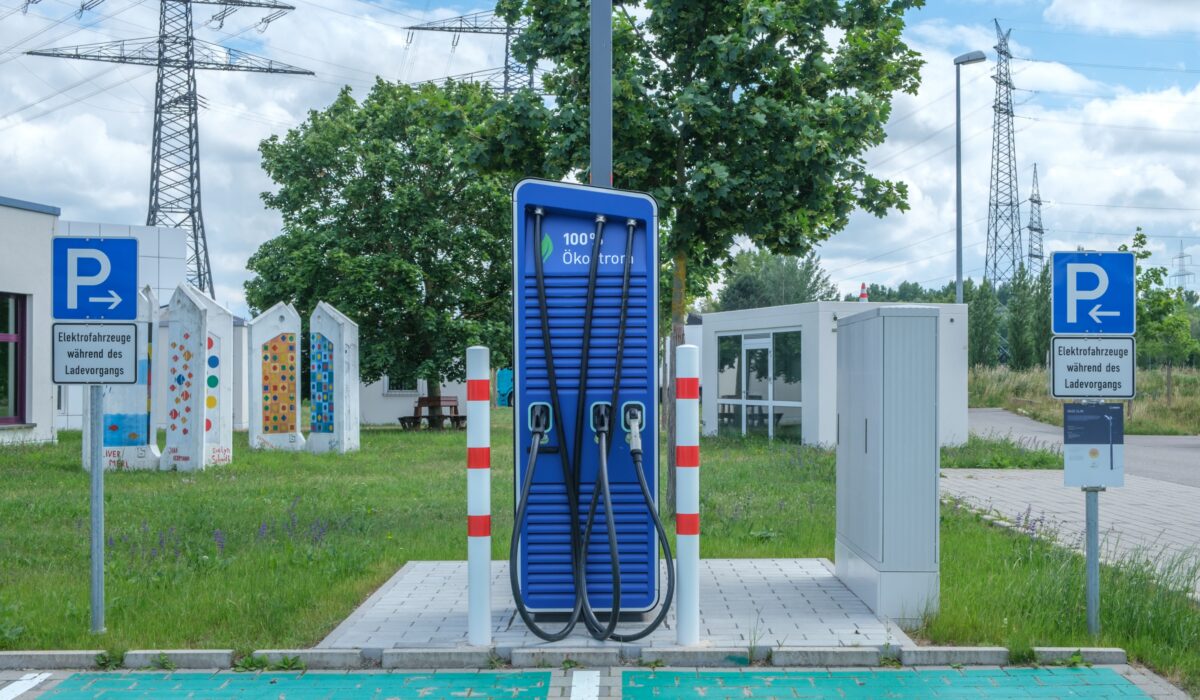
Key Takeaways
- The global EV charging station market is projected to reach USD 65.7 billion in 2026, according to Global Market Insights Inc.
- Over 7 million public charging points were available worldwide at the end of 2025, according to the International Energy Agency (IEA).
- Fast chargers are projected to account for 51.7% of the global EV charging station market share in 2026, according to IEA data.
- The North American Charging Standard (NACS) has been adopted by most major automakers for 2025 models, simplifying future charging.
- Driver satisfaction with public charging declined in 2025 due to concerns about costs, payment friction, and lack of price transparency, according to the J.D. Power U.S. EVX Public Charging Study.
For many electric vehicle (EV) owners and prospective buyers, the biggest question revolves around how and where to charge their cars. Navigating the evolving landscape of EV charging can feel complex, but **Understanding EV Charging Stations 2026** is crucial for a seamless electric driving experience. This comprehensive guide will equip you with the knowledge needed to confidently charge your EV, whether at home or on the go.
Quick Answer: Understanding EV charging stations in 2026 means navigating over 7 million public points, diverse charger levels (L1, L2, DC Fast), evolving connector standards (NACS), and managing costs and reliability. Expect growth in ultra-fast charging, smart technologies, and solutions for home and multi-unit dwellings.
What are the Main Types of EV Charging Stations in 2026?
The main types of EV charging stations in 2026 are categorized by their power output and charging speed: Level 1 (slow AC), Level 2 (medium AC), and DC Fast Charging (rapid DC), each suited for different use cases and charging needs. The global electric vehicle charging station market is projected to reach USD 65.7 billion in 2026, according to Global Market Insights Inc. This growth reflects the increasing diversity and availability of these charging solutions.
Understanding EV Charging Stations 2026 requires recognizing the distinct roles each level plays in the broader charging ecosystem. For instance, Level 1 is ideal for overnight trickle charging, while DC Fast Charging is essential for long-distance travel.
Level 1 Charging (120V AC)
Level 1 charging utilizes a standard 120V AC household outlet, making it the most accessible but also the slowest option. It typically adds about 2-5 miles of range per hour, according to the U.S. Department of Energy (DOE) Alternative Fuels Data Center (AFDC). This type of charging is often sufficient for plug-in hybrid electric vehicles (PHEVs) or for EV owners with short daily commutes who can charge overnight.
Most EVs come with a portable Level 1 charger, allowing immediate charging without any additional installation. While convenient, its slow speed means a full charge for a long-range EV could take days, making it primarily a supplemental or emergency solution.
Level 2 Charging (240V AC)
Level 2 charging is the most common type for home and workplace installations, providing significantly faster charging than Level 1. These chargers typically deliver 240V AC power, adding 20-60 miles of range per hour, according to the AFDC. Products like the ChargePoint Home Flex or Tesla Wall Connector Gen 3 are popular examples of Level 2 chargers.
For most EV drivers, Level 2 charging offers the best balance of speed and convenience for daily use. It requires installation by an electrician to wire a 240V circuit, similar to what’s used for an electric clothes dryer.
DC Fast Charging (DCFC)
DC Fast Charging, also known as Level 3 charging or rapid charging, converts AC power from the grid to DC power before it reaches the vehicle, allowing for much higher power delivery directly to the EV’s battery. These stations can add 100-200+ miles of range in just 20-30 minutes, according to Electrify America data. Fast chargers are projected to account for 51.7% of the global EV charging station market share in 2026, up from a minority position three years prior, according to IEA data.
Networks like Electrify America, EVgo, and Tesla Superchargers specialize in DC Fast Charging. These are crucial for road trips and for drivers who need to charge quickly away from home. Understanding EV Charging Stations 2026 means recognizing the dominance of DC Fast Charging in public infrastructure growth.
How Do EV Charging Stations Work? An Overview for Understanding EV Charging Stations 2026
EV charging stations work by delivering electrical energy from the grid to an electric vehicle’s battery, with the process varying based on whether it’s AC or DC charging and the specific connector standard. At its core, an EV charging station manages the flow of electricity, communicates with the vehicle to ensure safe charging, and often includes payment and network connectivity features.
Understanding EV Charging Stations 2026 from a technical perspective clarifies the differences between charger types and connector standards. The vehicle’s onboard charger converts AC power to DC for the battery, unless it’s a DC Fast Charger which bypasses this.
AC Charging vs. DC Charging
The fundamental difference lies in where the AC-to-DC conversion occurs. In AC charging (Level 1 and Level 2), the alternating current (AC) from the grid flows through the charging station to the vehicle, where the car’s internal onboard charger converts it to direct current (DC) to charge the battery. This conversion process limits the charging speed.
With DC Fast Charging, the conversion from AC to DC happens within the charging station itself, outside the vehicle. This allows the station to deliver high-power DC directly to the car’s battery, bypassing the onboard charger and enabling significantly faster charging speeds. This distinction is critical for Understanding EV Charging Stations 2026 and their capabilities.
Connector Standards and Compatibility
The connector standard determines which vehicles can plug into a specific charging station. In North America, the primary standards for AC charging are J1772, while for DC Fast Charging, it has historically been a mix of CCS1 and CHAdeMO.
However, the landscape is rapidly evolving with the rise of the North American Charging Standard (NACS). Tesla developed the NACS connector, and by the end of 2025, most major automakers announced their adoption of NACS for new models, beginning in 2025 or 2026. This move is expected to standardize charging infrastructure, making NACS charging standard the dominant connector for future EVs in North America, simplifying the overall experience for drivers.
Breaking Down EV Charging Costs: Public, Home, and Subscription Models
Breaking down EV charging costs involves considering several variables, including electricity rates, charger type, network fees, and whether you’re charging at home or publicly, with home charging generally being the most economical. The 2025 J.D. Power U.S. EVX Public Charging Study found that despite improved reliability, overall driver satisfaction declined due to concerns about costs, payment friction, and lack of price transparency.
Understanding EV Charging Stations 2026 from a financial perspective is key to managing your electric vehicle ownership budget. This includes looking beyond the per-kWh rate.
Home EV Charging Cost
The cost of home EV charging is primarily determined by your local electricity rates, which average around $0.17 per kilowatt-hour (kWh) in the U.S. as of 2025, according to the U.S. Energy Information Administration (EIA). Charging an EV with a 60 kWh battery from empty to full at home could cost approximately $10.20, making it significantly cheaper than gasoline for equivalent range.
Installation of a Level 2 charger also contributes to the home EV charging cost. While the charger unit itself can range from $300-$1,000, installation costs can vary widely from $500 to $2,500 or more, depending on your home’s electrical panel and wiring needs. Many utilities offer off-peak rates, which can further reduce costs if you charge during designated hours.
Public Charging Costs
Public EV charging costs vary widely by network, charger speed, and payment model. You might encounter:
- Per-kWh pricing: Common for DC Fast Charging, ranging from $0.30 to $0.60+ per kWh. Electrify America, for example, often charges around $0.43 per kWh for non-members.
- Per-minute pricing: Less common but still used, especially for older DCFC units, where you pay for the time connected, regardless of actual power delivered.
- Session fees: A flat fee per charging session, sometimes in addition to energy costs.
- Idle fees: Imposed by networks like Tesla and Electrify America to encourage drivers to move their vehicles once charging is complete, typically after a grace period.
These varying structures make Understanding EV Charging Stations 2026 and their associated costs a complex task. Using dedicated apps from providers like ChargePoint and Electrify America can help you compare prices.
Subscription Models and Discounts
Many charging networks offer subscription plans or memberships that provide discounted rates or waived session fees. For example, Electrify America’s Pass+ membership offers lower per-kWh rates. Tesla Supercharger access is integrated, with costs generally competitive.
These subscription models can lead to significant savings for frequent public charger users. It’s worth comparing plans if you regularly rely on a specific network.
Public EV Charging in 2026: Reliability, Etiquette, and Finding Stations
Public EV charging in 2026 is characterized by a rapidly expanding network, ongoing efforts to improve reliability, and the continued importance of proper charging etiquette, all supported by increasingly sophisticated mobile applications. The total stock of public charging points worldwide reached more than 7 million at the end of 2025, according to the International Energy Agency (IEA).
“Charging is still the biggest question mark for many EV buyers, but the picture is improving,” states GreenCars, an automotive industry publication, highlighting that reliability is getting more attention in 2026. This focus on charging station reliability is crucial for widespread EV adoption.
Charger Reliability and Uptime
Charger reliability remains a significant concern for EV drivers, though improvements are being made. The 2025 J.D. Power U.S. EVX Public Charging Study noted that non-charging visits (due to broken equipment or other issues) fell to 14% from 19% in the previous year. However, “For charge point operators (CPOs), the main challenge has shifted from charger availability to delivering a seamless charging experience,” according to Driivz analysis of the study.
To find reliable stations, drivers increasingly rely on apps that provide real-time status updates and user reviews. ChargePoint, Electrify America, and Tesla apps often show charger availability and functionality. This active driver feedback is invaluable for Understanding EV Charging Stations 2026 and selecting functional units.
EV Charging Etiquette
Proper public charging etiquette is essential for a positive experience for all EV drivers. This includes:
- Only charge when needed: Don’t occupy a fast charger if you only need a small top-up and there are others waiting.
- Move your car when done: Avoid idle fees and free up the station for the next driver. Many apps notify you when your charge is complete.
- Don’t unplug other vehicles without permission: Unless there’s a clear sign indicating it’s allowed, assume a car is charging.
- Report broken chargers: Help the community by reporting non-functional stations through the app or directly to the network provider.
Adhering to public charging etiquette fosters a considerate environment and optimizes the use of shared resources.
Finding Stations: Best EV Charging Apps 2026
Locating available and functional charging stations is made easy with dedicated mobile apps. The best EV charging apps 2026 offer real-time data, filter options, and navigation.
- PlugShare: A community-driven app with extensive user reviews, photos, and real-time status updates for nearly all networks.
- ChargePoint: For finding and initiating charging sessions on the ChargePoint network.
- Electrify America: Specifically for locating and paying at Electrify America’s Hyper-Fast charging stations.
- Tesla App: Integrates seamlessly with Tesla vehicles for Supercharger navigation and payment, and now supports non-Tesla vehicles at select stations.
These apps are indispensable tools for Understanding EV Charging Stations 2026 and planning your journeys.
Home EV Charging: Solutions for Every Driver, Including MUDs and V2G
Home EV charging offers the most convenience and cost-effectiveness for most drivers, with solutions ranging from basic Level 1 outlets to advanced Vehicle-to-Grid (V2G) systems, and increasingly, tailored options for multi-unit dwellings (MUDs). By the end of 2025, over 43 million private light-duty vehicle charging points were in service globally, supporting a fleet of roughly 76 million electric cars, according to the IEA.
This widespread adoption underscores the importance of personalized home charging setups. For a deeper dive into managing your vehicle’s power source, you might also find our guide on Extend Car Battery Lifespan 2026: 7 Essential Tips helpful.
Standard Home Charging Setups (Level 1 & Level 2)
Most EV owners primarily charge at home using either Level 1 or Level 2 chargers. Level 1 is a simple plug-and-play solution using a standard wall outlet. For faster charging, a Level 2 charger, such as the IYILO Level 2 (best overall, most affordable, according to EnergySage 2026) or the Grizzl-E Ultimate 48 (most durable enclosure), requires a 240V circuit installation.
The convenience of waking up to a full battery makes home charging a cornerstone of EV ownership. Smart Level 2 chargers, like the Emporia Pro, can integrate with home solar systems for optimized energy use.
EV Charging for Multi-Unit Dwellings (MUDs)
Charging in multi-unit dwellings (MUDs) like apartments and condos presents unique challenges but is seeing growing solutions. Many MUDs are implementing shared charging stations or installing individual Level 2 chargers for residents. Landlords and property managers are increasingly recognizing the demand and exploring options like:
- Shared charging infrastructure: Centralized Level 2 or even DC Fast Chargers available to all residents, often managed by an app.
- Dedicated parking spot chargers: Individual Level 2 chargers installed for specific parking spaces, with costs often integrated into rent or HOA fees.
- Load management systems: Technology that intelligently distributes available power across multiple chargers to prevent overloading the building’s electrical system.
Policy initiatives and incentives are also emerging to encourage MUD charging installations, making Understanding EV Charging Stations 2026 in this context vital for urban dwellers.
Vehicle-to-Grid (V2G) and Vehicle-to-Home (V2H) Technologies
Vehicle-to-Grid (V2G) technology allows an EV to not only draw power from the grid but also send excess energy back to it, acting as a mobile power bank. Similarly, Vehicle-to-Home (V2H) enables an EV to power a home during outages or peak demand, potentially reducing electricity bills. Bidirectional Energy and Wallbox launched North America’s first multi-state bidirectional charging program for 180 households in California and Connecticut in 2025, showcasing this emerging trend.
While still nascent, V2G and V2H offer significant potential for energy resilience and cost savings. It requires a bidirectional charger and a compatible EV, representing a cutting-edge aspect of Understanding EV Charging Stations 2026.
The Future of EV Charging: Key Trends and Innovations for 2026
The future of EV charging in 2026 is marked by rapid innovation, with key trends including the expansion of ultra-fast charging, increasing standardization with NACS, the integration of smart charging technologies, and continued focus on enhancing the user experience. “Understanding where that demand is coming from, and how it is being met, is the starting point for any serious EV ownership or investment decision in 2026,” notes the International Energy Agency’s Global EV Outlook 2026.
This dynamic environment means that Understanding EV Charging Stations 2026 requires looking at current advancements and anticipating future developments. The global electric vehicle charging infrastructure market is expected to grow at a Compound Annual Growth Rate (CAGR) of 25.0% from 2026 to 2033, reaching USD 238.8 billion by 2033, according to Grand View Research.
Ultra-Fast Charging and Infrastructure Growth
The trend towards ultra-fast charging is accelerating, with more stations capable of delivering 350 kW or even 400 kW of power. Approximately 20% of ultra-fast chargers deployed in the European Union are rated at 350 kW or higher. Companies like ABB (with its Terra 360 charger) and Alpitronic (HYC400) are leading the charge in this segment.
This push for faster charging directly addresses range anxiety and makes long-distance EV travel more comparable to gasoline refueling times. The IEA notes, “The faster adoption of fast and ultra-fast chargers compared to slow chargers reflects the expanding share of fast chargers seen in Europe.”
NACS Connector Standard Dominance
The widespread adoption of the North American Charging Standard (NACS) by major automakers like Ford, GM, and Hyundai, starting with 2025 models, is a monumental shift. This move promises to streamline the charging experience by reducing the need for adapters and creating a more unified charging network. Tesla’s Supercharger network, the largest DC fast-charging network in the US, with 37,736 ports and 51% market share as of June 2026, will become accessible to a broader range of EVs.
This standardization will significantly simplify Understanding EV Charging Stations 2026 for new EV buyers, as connector compatibility concerns will diminish.
Smart Charging and Energy Management
Smart charging technologies are becoming increasingly sophisticated, allowing for optimized energy use and cost savings. These systems can:
- Schedule charging: Charge your EV during off-peak hours when electricity rates are lower.
- Integrate with renewables: Prioritize charging when solar panels are generating excess power.
- Participate in demand response programs: Adjust charging to support grid stability, sometimes earning incentives.
- AI-driven management: “AI-driven electric vehicle charging and energy management will help multi-site networks and fleet managers reduce operating costs while improving charger availability and overall uptime,” states Driivz, a leading EV charging software provider.
These innovations are vital for the continued growth of the electric vehicle charging market.
Improved User Experience and Payment Solutions
The user experience for public charging is continually improving, with a focus on seamless payment and reliable access. Innovations include:
- Plug & Charge: Automatically initiates and pays for charging simply by plugging in, eliminating the need for apps or cards.
- Contactless payments: More stations are integrating tap-to-pay options.
- Enhanced app features: Real-time charger availability, predictive maintenance, and personalized recommendations.
These advancements are designed to make Understanding EV Charging Stations 2026 and using them as intuitive as refueling a gasoline car.
Frequently Asked Questions
How much does it cost to use a public charging station?
The cost to use a public charging station varies significantly, typically ranging from $0.30 to $0.60+ per kilowatt-hour (kWh) for DC Fast Charging, or sometimes per minute. These costs are often higher than home charging, which averages around $0.17 per kWh in the U.S. as of 2025, according to the U.S. Energy Information Administration (EIA). Always check the pricing within the charging network’s app before you plug in to avoid surprises.
How do EV charging stations work?
EV charging stations work by transferring electrical energy from the grid to an electric vehicle’s battery, either as alternating current (AC) for slower charging or direct current (DC) for faster charging. AC chargers use the car’s onboard converter, while DC Fast Chargers convert power at the station, bypassing the car’s internal system. The process involves a handshake protocol between the station and the vehicle to ensure safe and efficient power delivery.
What are the 3 types of EV charging stations?
The three main types of EV charging stations are Level 1 (120V AC, slow), Level 2 (240V AC, medium speed), and DC Fast Charging (high-power DC, rapid speed). Level 1 adds about 2-5 miles of range per hour, Level 2 adds 20-60 miles per hour, and DC Fast Charging can add 100-200+ miles in 20-30 minutes, according to AFDC data. Each type serves different needs, from overnight home charging to quick top-ups on road trips.
What is the most common EV charging station?
The most common EV charging station for daily use is Level 2 AC charging, found in homes, workplaces, and public destinations, offering a practical balance of speed and accessibility. However, for public infrastructure, DC Fast Charging is rapidly expanding and is projected to hold 51.7% of the global EV charging station market share in 2026, according to IEA data. This indicates a growing shift towards faster public options.
What are the best Level 2 EV chargers?
The best Level 2 EV chargers for home use in 2026 often balance affordability, features, and durability, with popular options including the IYILO Level 2 for value and the Tesla Wall Connector Gen 3 for integration and warranty. Other highly-rated chargers like the Grizzl-E Ultimate 48 offer robust construction, while the Emporia Pro excels in integrating with home solar systems, according to EnergySage 2026. The ideal choice depends on your specific needs, budget, and vehicle.