

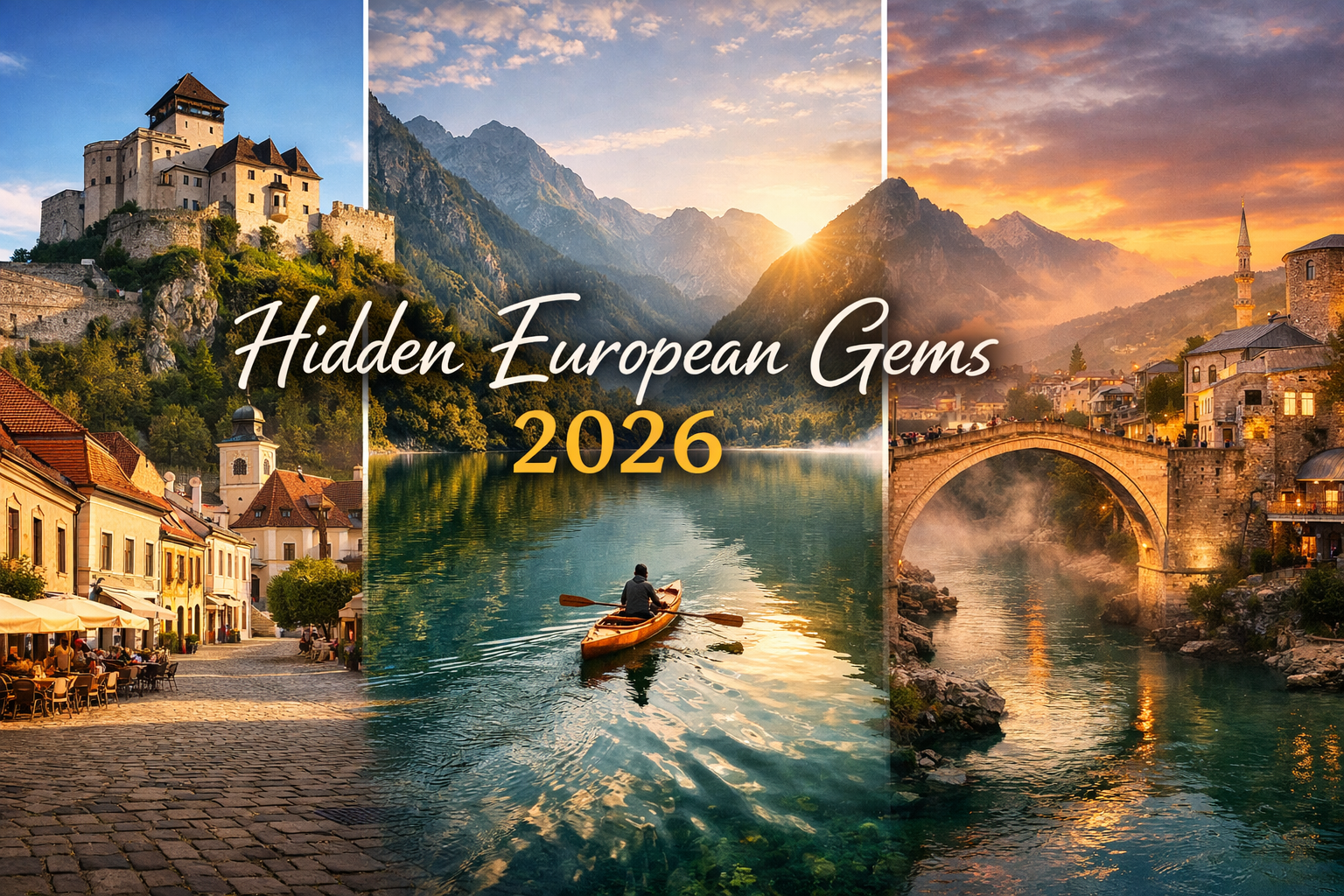
Europe is changing. In 2026, the savvy traveler isn’t looking for the best view of the Eiffel Tower or a spot on the crowded steps of the Trevi Fountain. Instead, the trend has shifted toward “Cool-cationing” and “Slow Travel” finding places where the air is fresh, the history is raw, and you can actually hear your own footsteps on the cobblestones.
If you are looking to outsmart the crowds this year, here are the top 5 hidden gem destinations in Europe for 2026.
1. Trenčín, Slovakia: The Medieval Surprise
While everyone flocks to Prague or Vienna, Trenčín is quietly stepping into the spotlight as the European Capital of Culture for 2026. This isn’t just a title; the city has undergone a massive transformation, opening up historic spaces that were previously closed to the public.
- Why it’s a gem: It offers the same dramatic castle views and pastel-colored squares as Central Europe’s famous capitals but at a fraction of the cost.
- The Vibe: Authentic and artistic. You can spend your morning exploring the 11th-century Trenčín Castle and your afternoon at a local “Pohoda” style mini-festival.
- Don’t Miss: The legendary “Lover’s Well” at the castle and the newly renovated Synagogue, which has become a hub for contemporary art.
2. Lake Bohinj, Slovenia: The “Quiet” Alternative to Bled
Slovenia has become a darling of European travel, but while Lake Bled is now a social media circus, Lake Bohinj remains an untouched paradise. Located just 30 minutes further into the Julian Alps, it is deeper, wilder, and infinitely more peaceful.
- Why it’s a gem: It is part of Triglav National Park, meaning strict environmental protections have kept large hotel chains and noisy crowds at bay.
- The Vibe: Pure, elemental nature. It’s the kind of place where you wake up to mist on the water and spend the day kayaking in glass-clear glacial runoff.
- Don’t Miss: Take the Vogel Cable Car for a panoramic view of the Alps, or hike to the Savica Waterfall before the morning rush.
3. Cádiz, Spain: Western Europe’s Oldest Secret
If you love the energy of Seville but hate the 40°C summer heat and the elbow-to-elbow tourists, head to the coast. Cádiz is often cited as the oldest continuously inhabited city in Western Europe, yet it feels like a private discovery.
- Why it’s a gem: It’s surrounded almost entirely by water, giving it a permanent sea breeze and a unique “island city” feel. In 2026, it is gaining traction for its high-end gastronomy that remains rooted in local fish markets.
- The Vibe: Convivial and ancient. The streets are a labyrinth of salt-scented alleys where neighbors still chat across balconies.
- Don’t Miss: The central food market (Mercado Central) for fresh oysters and a glass of local Sherry, and a sunset walk along the La Caleta beach.
4. Oulu, Finland: The Arctic Capital of Culture
For those looking to escape the heatwaves of Southern Europe, Oulu is the ultimate “cool-cation.” Sharing the 2026 Capital of Culture title with Trenčín, this Finnish city is where high-tech innovation meets the rugged beauty of the edge of the Arctic.
- Why it’s a gem: Most travelers stop at Helsinki or head straight to Rovaniemi for Santa Claus. Oulu is the cultural heart that people usually skip over.
- The Vibe: Scandi-cool. It’s incredibly bike-friendly and serves as a gateway to both forest wilderness and frozen sea adventures.
- Don’t Miss: The island of Pikisaari, an idyllic artists’ village filled with wooden houses, and the Nallikari beach for a midnight sun stroll.
5. Mostar, Bosnia and Herzegovina: The Bridge Between Worlds
Mostar is famous for its iconic bridge, the Stari Most, but in 2026, it’s becoming the base for travelers exploring the wider Balkan region. While Dubrovnik (just 2 hours away) struggles with over-tourism, Mostar offers a deep, soulful connection to history that feels much more personal.
- Why it’s a gem: It is one of the most affordable destinations in Europe while offering some of the most striking architecture—a blend of Ottoman, Austro-Hungarian, and Balkan styles.
- The Vibe: Intense and beautiful. The sound of the call to prayer mixing with the rush of the emerald-green Neretva River creates an atmosphere you won’t find anywhere else.
- Don’t Miss: A short trip to the Blagaj Tekke (a Dervish monastery built into a cliff) and jumping (or watching the pros jump) from the bridge into the icy waters below.
Pro-Tip for 2026 Travel
To truly avoid the crowds, aim for the “Shoulder Seasons” (May-June or September-October). Not only is the weather more manageable, but you’ll also find that these hidden gems are even more affordable, allowing you to stay longer and dive deeper into the local culture.





Leave a Reply