

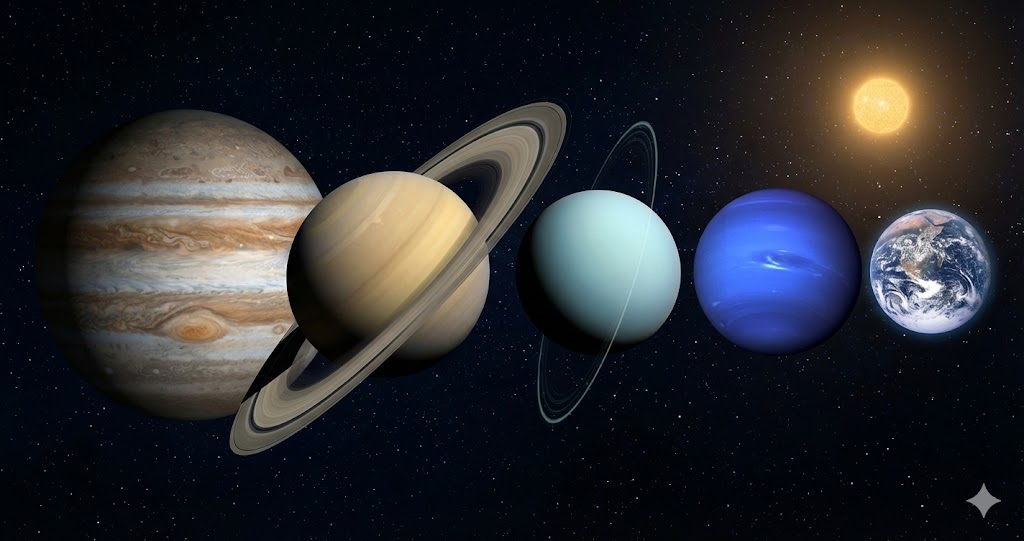
The solar system is a vast and mysterious place, dominated by massive celestial bodies that dwarf our home world. While there are eight distinct planets orbiting our Sun, the top 5 largest planets in the solar system stand out for their immense diameters, powerful atmospheres, and complex systems of moons and rings.
From gas giants to ice worlds, let’s explore the ranking of these cosmic titans by size, composition, and their most fascinating characteristics.
1. Jupiter – The King of Planets
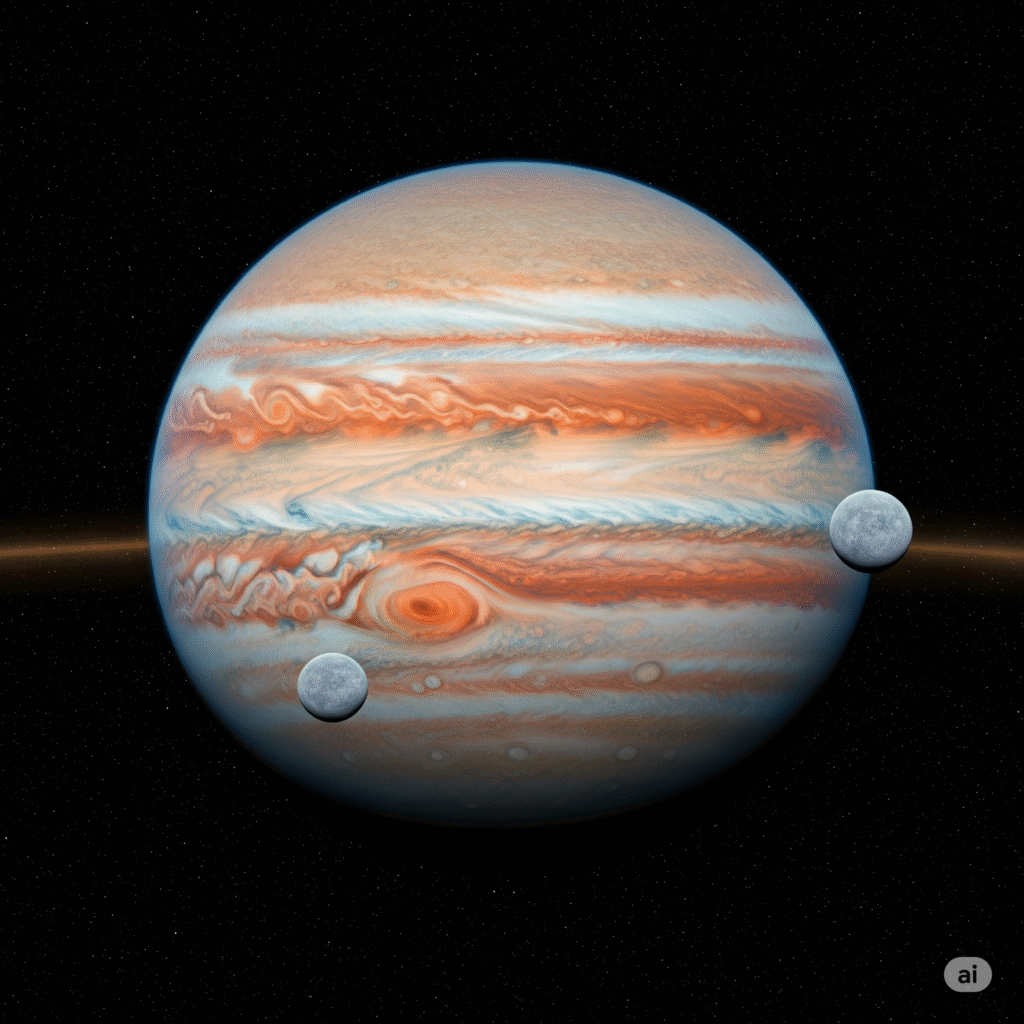
Jupiter is the undisputed King of the Solar System. As the largest planet, it is massive enough to fit over 1,300 Earths inside it. Composed primarily of hydrogen and helium, Jupiter is famous for its Great Red Spot, a gigantic storm that has been raging for centuries and is wider than our entire planet.
Jupiter also commands a massive entourage. Recent discoveries have brought its total moon count to over 95, including Ganymede, the largest moon in the solar system . Its magnetic field is colossal, acting as a shield that often protects Earth by pulling in dangerous comets and asteroids with its intense gravity.
2. Saturn – The Ringed Wonder
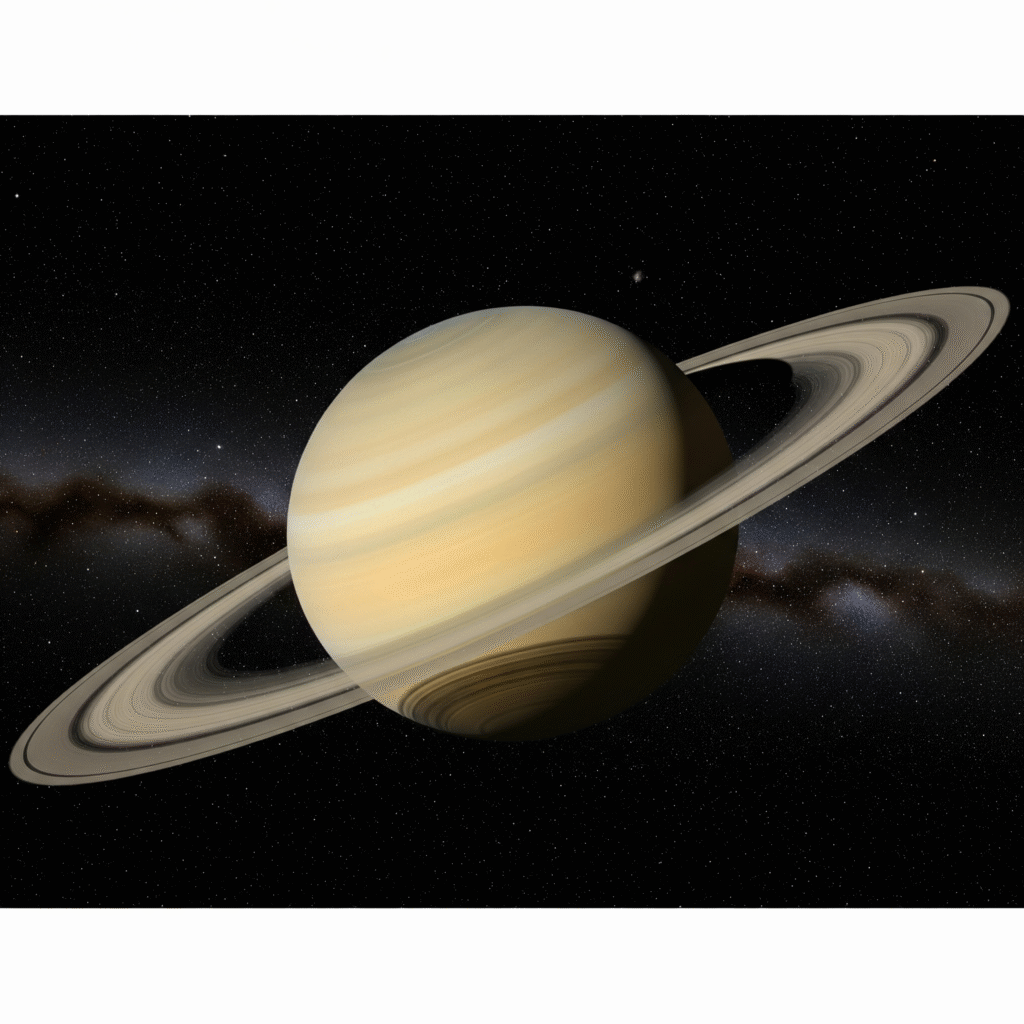
Saturn holds the second spot in the list of the largest planets in the solar system. Its diameter stretches to around 120,536 kilometers. Famous for its spectacular rings, Saturn’s rings are made of ice, rock, and dust.
Despite its size, Saturn is very light. If there were a giant bathtub, it would float. The planet has over 140 known moons. Titan, its largest moon, has a dense atmosphere and lakes of liquid methane.
Saturn’s beauty and mystique attract both scientists and sky watchers. Its fast rotation causes it to bulge at the equator.
3. Uranus – The Tilted Giant
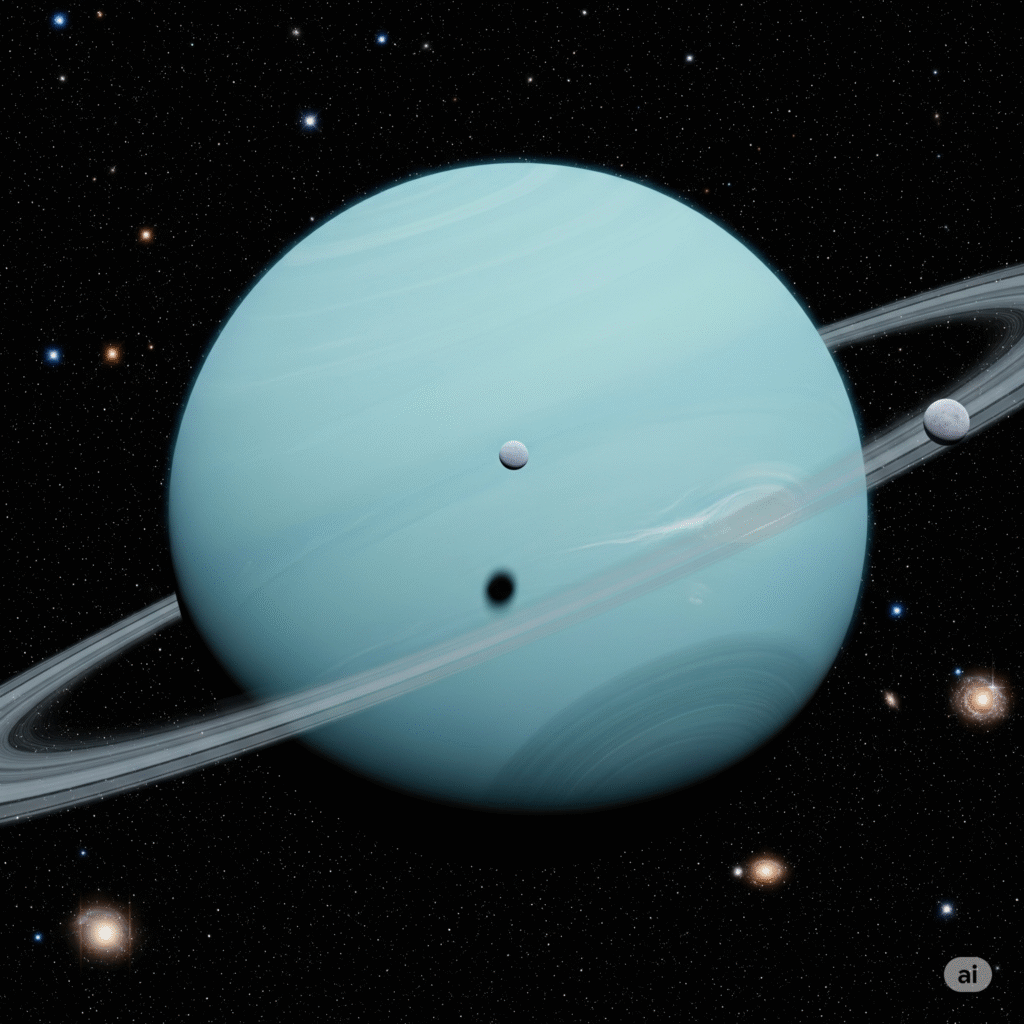
Uranus is the third-largest planet in the solar system. It has a diameter of about 51,118 kilometers. This ice giant is known for its unique sideways rotation. It spins almost completely on its side, making its seasons extreme and long.
Uranus has a pale blue-green color due to methane gas in its atmosphere. The planet has at least 27 moons and faint ring systems. It’s one of the coldest planets with average temperatures near -224°C.
Uranus remains a mystery due to limited exploration. However, it’s a fascinating world full of surprises.
4. Neptune – The Windy Blue Planet
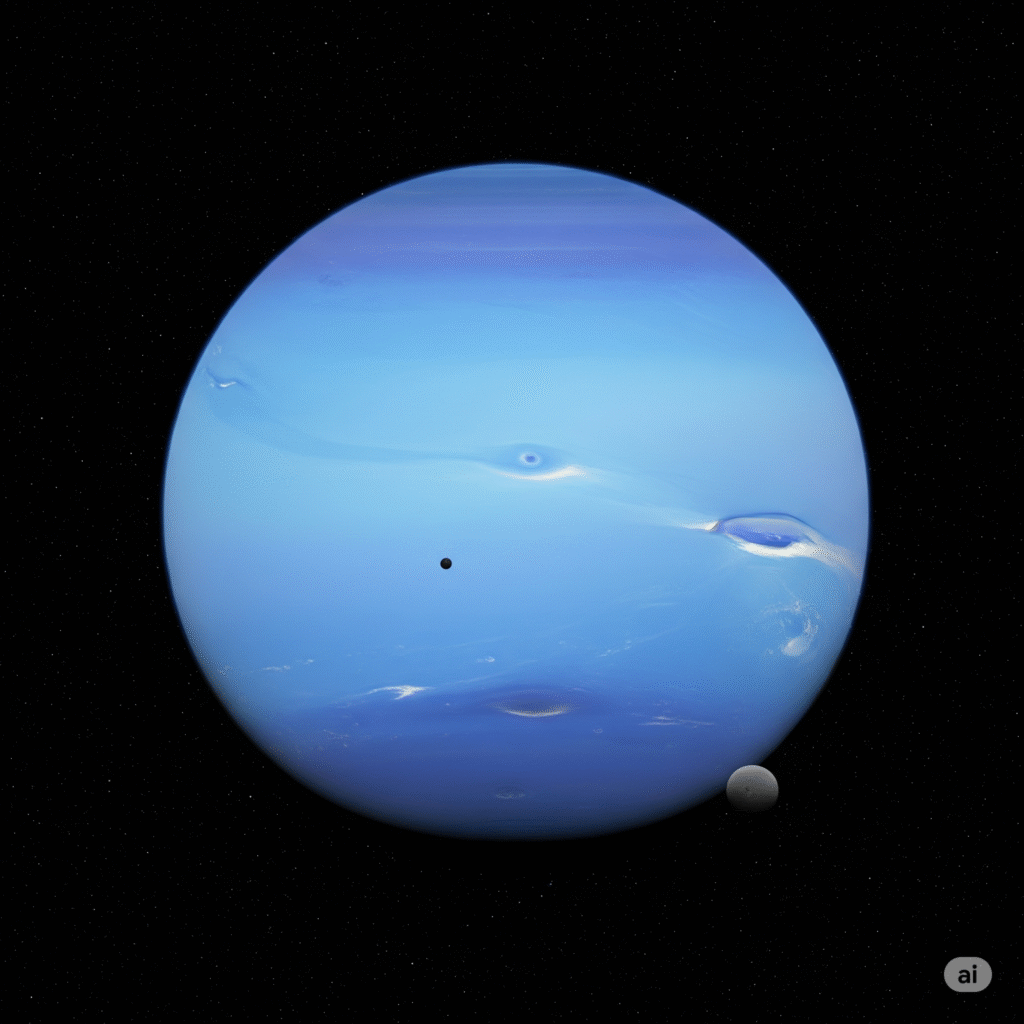
Neptune comes next in the ranking of largest planets in the solar system. With a diameter of 49,528 kilometers, it’s slightly smaller than Uranus but more massive. This deep blue planet is known for its fierce winds—some exceeding 2,000 km/h.
Neptune’s atmosphere is rich in hydrogen, helium, and methane. Its dark spots are storms, similar to Jupiter’s Great Red Spot. Triton, its largest moon, orbits in reverse and may have geysers of liquid nitrogen.
Neptune lies farthest from the Sun and takes 165 years to orbit it. Its distant location adds to its mystique.
5. Earth – Our Unique Home
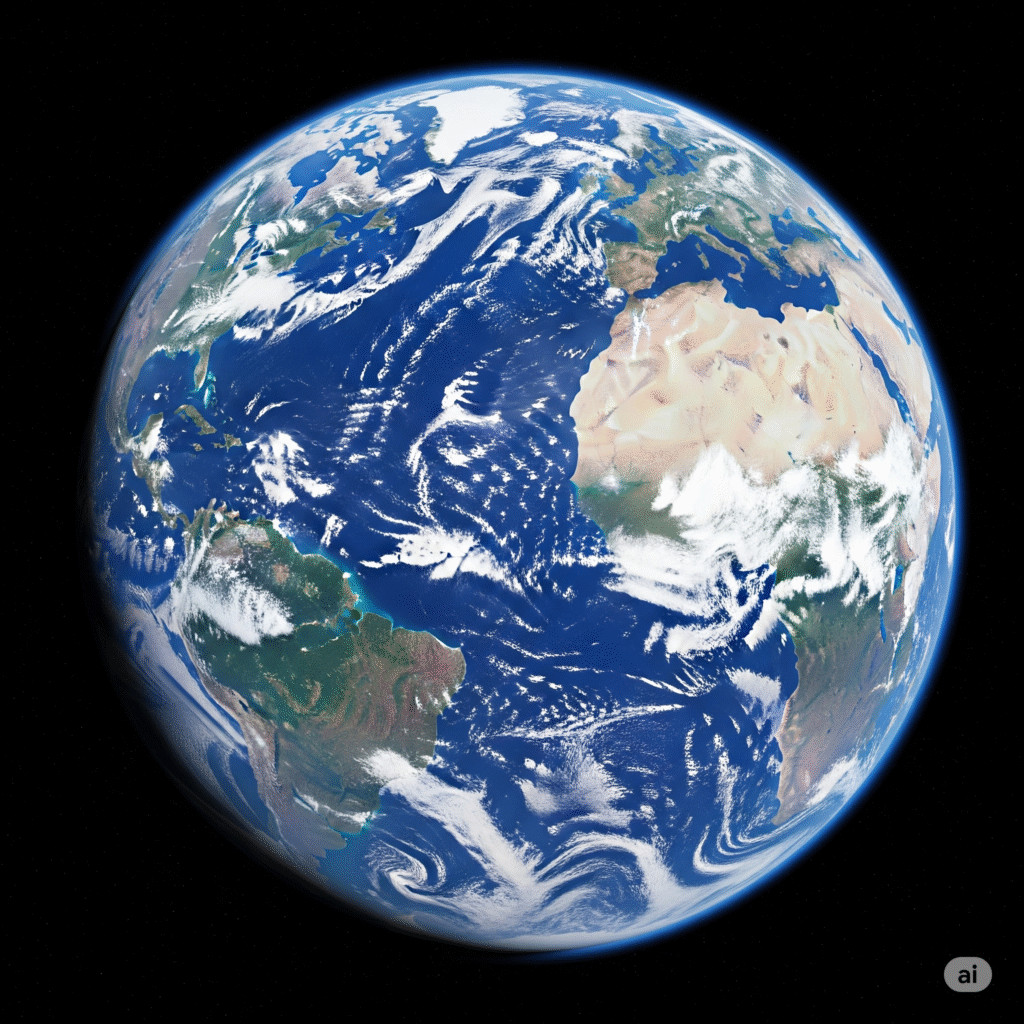
While not a gas or ice giant, Earth is the fifth-largest planet in the solar system. Its diameter measures around 12,742 kilometers. Earth stands out for supporting life, thanks to liquid water and a breathable atmosphere.
Its surface is diverse, with oceans, continents, and mountains. Earth’s magnetic field shields us from harmful solar radiation. The planet rotates in 24 hours and orbits the Sun in 365 days.
With one moon, Earth remains the only known planet to harbor life. It’s our precious blue marble in the vast cosmos.
Final Thoughts on the Largest Planets in Solar System
The largest planets in the solar system are majestic, mysterious, and vital to our understanding of space. From Jupiter’s storms to Neptune’s winds, these giants continue to captivate astronomers.






Leave a Reply