
Key Takeaways
- The global AI in healthcare market is projected to reach $50.70 billion in 2026, according to Azumo (2026).
- Approximately 75% of U.S. health systems now utilize at least one AI application, according to Azumo (2026).
- AI-scribe deployments have reported a 40–45% reduction in physician documentation time, according to Uvik Software (2026).
- Over 1,357 AI-enabled medical devices have been cleared or approved by the U.S. FDA as of February 2026.
- The average ROI on healthcare AI investments is $3.20 for every $1 invested, with returns typically realized within 14 months, according to Azumo (2026).
Are you ready to discover how technology is revolutionizing medicine? AI Innovations Transforming Healthcare 2026 are not just theoretical concepts; they are actively reshaping patient care, operational efficiency, and the very future of medical practice. This article will explore the top advancements, provide real-world examples, and discuss the practical strategies for integrating these powerful AI solutions into healthcare systems today.
Quick Answer: In 2026, AI fundamentally transforms healthcare through innovations like enhanced diagnostic imaging, accelerated drug discovery, precision robotic surgery, intelligent clinical documentation, and personalized treatment plans, leading to improved accuracy, efficiency, and patient outcomes.
What are the Top AI Innovations Transforming Healthcare in 2026?
The top AI Innovations Transforming Healthcare 2026 span enhanced diagnostics, accelerated drug discovery, precision surgery, intelligent documentation, and personalized medicine. These advancements are driving a projected global AI in healthcare market value of $50.70 billion in 2026, according to Azumo (2026).
These innovations leverage deep learning, predictive analytics, and generative AI to address long-standing challenges in medical accuracy, efficiency, and accessibility. The key insight here is that AI is moving from experimental use to becoming standard digital infrastructure in many healthcare settings, particularly for imaging tools, according to Data Pilot (2026).
The widespread adoption of these technologies underscores a pivotal shift in how medical services are delivered. Healthcare organizations generated 30% of the world’s data in 2025, according to Uvik Software (2026), creating a rich environment for AI to extract insights and drive progress.
Here are the five leading areas where AI Innovations Transforming Healthcare 2026 are making the most significant impact:
- AI-Powered Diagnostic Imaging: AI algorithms analyze medical images (X-rays, CTs, MRIs, pathology slides) with unparalleled speed and accuracy, often surpassing human capabilities in early disease detection.
- Accelerated Drug Discovery & Development: AI platforms dramatically shorten the drug discovery pipeline by identifying novel disease targets and generating promising new molecules.
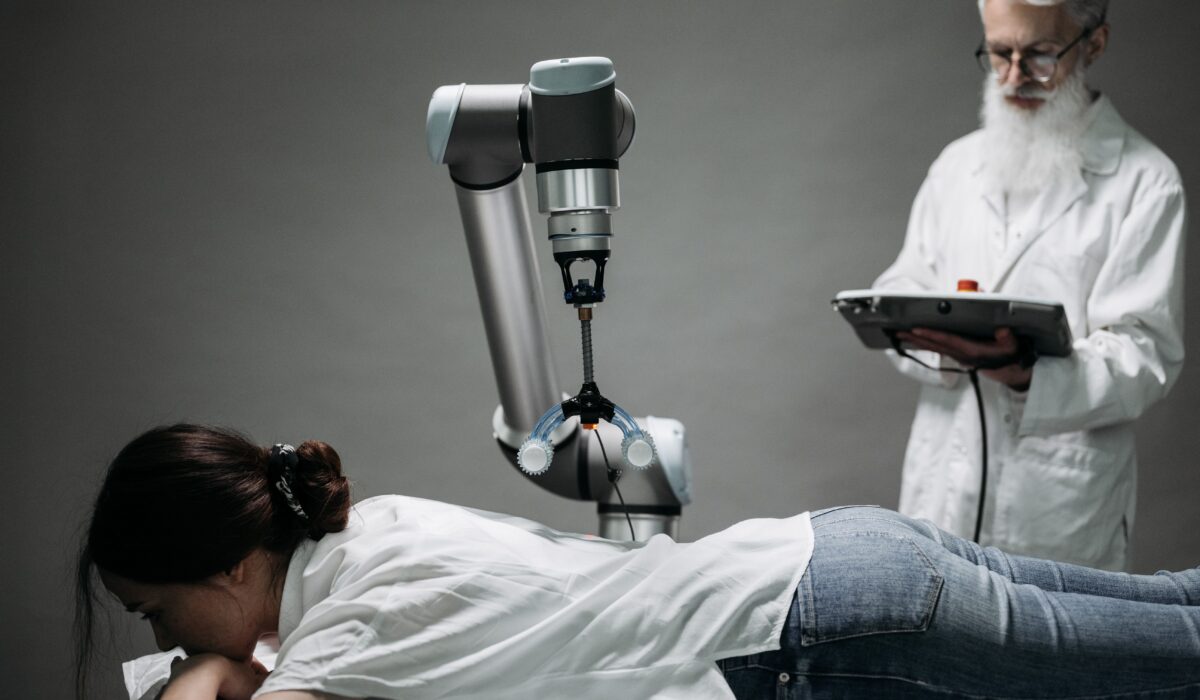
- Precision Robotic Surgery: AI-integrated robotic systems enhance surgical precision, minimize invasiveness, and improve patient recovery times through real-time guidance.
- Ambient Clinical Documentation & AI Scribes: Generative AI tools automate the creation of clinical notes from patient-physician conversations, freeing up clinicians’ time.
- Personalized Medicine & Predictive Analytics: AI analyzes vast datasets, including genomics and patient history, to create highly individualized treatment plans and predict disease progression.
Each of these areas represents significant progress in the broader landscape of AI Innovations Transforming Healthcare 2026, promising a future of more effective and accessible care.
How is AI Transforming Patient Care in 2026?
AI is transforming patient care in 2026 by significantly improving diagnostic accuracy, personalizing treatment pathways, and enhancing the efficiency of clinical workflows, which ultimately leads to better patient outcomes and experiences. For instance, AI-scribe deployments have reported a 40–45% reduction in physician documentation time, according to Uvik Software (2026), allowing more focus on patients.
The impact of AI on patient care 2026 is multifaceted, touching nearly every aspect of the patient journey. From the moment a patient enters a clinic to post-treatment follow-ups, AI is introducing efficiencies and precision that were previously unimaginable.
One of the most profound effects of AI Innovations Transforming Healthcare 2026 is the shift towards proactive and preventive care. Predictive analytics, powered by AI, can identify patients at high risk for certain conditions, enabling early interventions that prevent severe illness.
AI also plays a critical role in enhancing the patient experience by reducing wait times and streamlining administrative tasks. This ensures that healthcare providers can dedicate more attention to direct patient interaction, fostering trust and improving communication.
Furthermore, AI-driven precision medicine advancements 2026 are tailoring treatments based on individual genetic makeup, lifestyle, and environmental factors. This level of personalization means patients receive therapies that are more likely to be effective, minimizing trial-and-error approaches and improving recovery.
These changes reflect a future where patient care is not only more efficient but also deeply customized and predictive, thanks to the continuous evolution of AI Innovations Transforming Healthcare 2026.
Key Examples of AI in Healthcare Today
Key examples of AI in healthcare today demonstrate its practical impact across various medical disciplines, from imaging to surgical assistance and administrative tasks. Approximately 75% of U.S. health systems now use at least one AI application, according to Azumo (2026), highlighting widespread adoption of AI Innovations Transforming Healthcare 2026.
These real-world applications showcase how AI is moving beyond pilot programs to become an indispensable part of modern medicine. In practice, these tools are already proving their worth in daily clinical operations.
- AI-Powered Diagnostic Imaging:
- AI tools are embedded in radiology departments to analyze X-rays, CT scans, MRIs, and pathology slides, significantly improving diagnostic accuracy and speed.
- A German study demonstrated 17.6% higher breast cancer detection rates with AI assistance, while NHS England hospitals doubled stroke treatment rates using AI.
- MAIA Brain Medical Imaging AI processes studies on-premise for EU healthcare providers, ensuring GDPR compliance and demonstrating practical AI Innovations Transforming Healthcare 2026.
- AI in Drug Discovery:
- Companies like Insilico Medicine are at the forefront, using AI platforms such as Pharma.AI for end-to-end drug discovery, from target identification to molecule generation.
- Insilico Medicine’s ISM001-055 is a landmark achievement, being the first AI-designed drug targeting an AI-discovered disease target to show positive Phase IIa results for idiopathic pulmonary fibrosis. This exemplifies the power of AI Innovations Transforming Healthcare 2026 in accelerating therapeutic breakthroughs.
- AI Surgical Robotics:
- Systems like the MAKO Robotic System use AI for patient-specific implant positioning in knee and hip arthroplasty, significantly improving accuracy and surgical outcomes.
- The SSi Mantra platform integrates AI for real-time tissue recognition, motion stabilization, and decision support during surgery. Prof. Prokar Dasgupta, a renowned robotic urological surgeon, emphasizes that “The next few years will see intelligent robots impact all stages of surgery,” according to King’s College London (2026).
- Ambient Clinical Documentation & AI Scribes:
- Microsoft’s Nuance DAX Copilot operates in over 150 health systems, integrating seamlessly with electronic health records (EHRs) like Epic Systems. It drafts clinical notes from physician-patient conversations, saving physicians thousands of hours.
- Ambience Healthcare also offers an AI platform for documentation, coding, and clinical workflows, further demonstrating the utility of generative AI in healthcare applications 2026.
- athenahealth is launching athenaAmbient, a native ambient documentation solution, in February 2026, showcasing the rapid adoption of these efficiency-boosting AI Innovations Transforming Healthcare 2026.
- Personalized Medicine & Predictive Analytics:
- AI analyzes genetic profiles, clinical history, and lifestyle factors to build comprehensive treatment models, predicting drug responses and optimizing dosages.
- H2O.ai deploys predictive models in hospitals to identify sepsis risk and anticipate ICU transfers, offering critical early warnings.
- Tempus utilizes a multimodal AI platform integrating genomics, clinical records, and research data to drive personalized cancer care, showcasing the advanced capabilities of AI Innovations Transforming Healthcare 2026.
These examples highlight the tangible benefits and the rapid pace of adoption of AI Innovations Transforming Healthcare 2026 across the globe.
Navigating Implementation Challenges for AI in Healthcare
Navigating implementation challenges for AI in healthcare requires strategic planning, robust data governance, and effective change management to overcome hurdles like data integration, clinician adoption, and regulatory compliance. What most people miss is that successful AI integration isn’t just about the technology; it’s about embedding AI into clinical and operational processes, supported by strong data governance, compliance, and effective change management, according to Anna Christin Busch (2026).
The challenges of AI adoption in healthcare 2026 are significant, yet surmountable with a thoughtful approach. Data infrastructure, for instance, is a major hurdle, as healthcare organizations generated 30% of the world’s data in 2025, yet 97% of hospital data goes unused, according to Uvik Software (2026).
Key challenges include:
- Data Silos and Quality: Integrating disparate data sources and ensuring data accuracy, completeness, and standardization is fundamental for AI model training and performance.
- Clinician Buy-in and Training: Overcoming “tool fatigue” and ensuring healthcare professionals are adequately trained and confident in using AI tools is crucial for adoption.
- EHR Integration: Seamlessly integrating AI solutions with existing Electronic Health Record (EHR) systems, such as Epic Systems, is essential to avoid workflow disruptions and ensure data flow.
- Cost and ROI Justification: Initial investment in AI technology can be substantial, requiring clear ROI pathways and financial planning.
- Ethical and Regulatory Compliance: Adhering to strict privacy regulations (like HIPAA and GDPR) and ensuring AI models are fair and unbiased is paramount.
Addressing these challenges proactively is key to unlocking the full potential of AI Innovations Transforming Healthcare 2026. It requires a collaborative effort between technologists, clinicians, and administrators.
Addressing Ethical & Regulatory Frameworks for AI in Medicine
Addressing ethical and regulatory frameworks for AI in medicine is crucial to ensure patient safety, data privacy, and equitable access, with bodies like the U.S. FDA actively clearing AI-enabled medical devices. As of February 2026, the U.S. FDA has cleared or approved over 1,357 AI-enabled medical devices, according to GlobalMed (2026), indicating a proactive regulatory environment for AI Innovations Transforming Healthcare 2026.
The rapid advancement of AI Innovations Transforming Healthcare 2026 necessitates robust ethical guidelines and clear regulatory pathways. Ensuring fairness, transparency, and accountability in AI algorithms is paramount to building trust among patients and providers.
Ethical considerations of AI in medicine 2026 involve preventing bias in AI models, particularly concerning diverse patient populations, and ensuring patient data remains secure and private. Compliance with regulations like HIPAA in the U.S. and the EU AI Act is non-negotiable.
Furthermore, the discussion around accountability when AI makes a diagnostic or treatment recommendation is ongoing. Clear frameworks are needed to delineate responsibilities between AI developers, healthcare providers, and the AI systems themselves.
The goal is to foster innovation while safeguarding patient well-being and upholding the highest standards of medical ethics. This ongoing dialogue and development of guidelines are critical for the responsible deployment of AI Innovations Transforming Healthcare 2026.
How AI Will Decrease Healthcare Costs by 2026
AI will decrease healthcare costs by 2026 through enhanced operational efficiencies, reduced diagnostic errors, optimized resource allocation, and accelerated drug development, which collectively streamline processes and lower expenditures. AI is projected to reduce annual U.S. healthcare costs by $150 billion by 2026, saving approximately $460 per person, according to Uvik Software (2026).
The financial impact of AI Innovations Transforming Healthcare 2026 is substantial, promising significant savings across the healthcare continuum. These cost reductions stem from various applications that improve efficiency and accuracy.
For example, AI-powered predictive analytics can identify patients at risk of chronic conditions or hospital readmissions, allowing for proactive interventions that prevent costly emergency care. This proactive approach is a cornerstone of how AI Innovations Transforming Healthcare 2026 contribute to financial health.
Operational efficiencies are also driven by AI in administrative tasks, such as claims processing, fraud detection, and appointment scheduling. These applications reduce the need for manual labor and minimize errors, directly impacting overhead costs.
In drug discovery, AI significantly cuts down the time and resources required to bring new medications to market. By accelerating target identification and molecule synthesis, companies like Insilico Medicine can reduce the astronomical costs associated with traditional R&D, passing some of those savings down.
These combined efforts position AI Innovations Transforming Healthcare 2026 as a powerful tool for financial sustainability in a sector often burdened by escalating expenses. You might also be interested in how other Top Health Technologies 2026 contribute to efficiency.
What is the ROI on AI Investments in Healthcare?
The ROI on AI investments in healthcare is substantial, with organizations typically realizing significant financial returns within a short timeframe due to improved efficiency, better patient outcomes, and cost savings. The average ROI on healthcare AI investments is $3.20 for every $1 invested, with returns typically realized within 14 months, according to Azumo (2026).
This impressive return on investment makes a strong case for the continued adoption of AI Innovations Transforming Healthcare 2026. The value is not just financial, but also in enhanced patient satisfaction and clinical excellence.
For instance, the reduction in physician documentation time by 40–45% through AI-scribe deployments, as reported by Uvik Software (2026), directly translates into increased physician capacity and potentially higher patient throughput, boosting revenue.
Furthermore, AI-driven diagnostic tools that improve accuracy and speed can lead to earlier treatment, preventing conditions from worsening and requiring more expensive interventions. This improvement in care quality contributes to both cost savings and better health outcomes, solidifying the value of AI Innovations Transforming Healthcare 2026.
In practice, the ROI is realized through a combination of direct cost savings, increased operational efficiency, and improved revenue streams from enhanced service delivery. This makes AI an attractive investment for healthcare providers looking to modernize and optimize their operations.
The Future of AI in Healthcare: Beyond 2026
The future of AI in healthcare beyond 2026 promises even deeper integration, with advancements in generative AI, multimodal platforms, and hyper-personalized predictive models further revolutionizing medical practice and patient care. Veronica DeFelice, Director of Biologics at Sapio Sciences (2026), notes that identifying disease targets will increasingly rely on in silico exploration before any wet-lab validation begins.
The impact of AI on patient care 2026 is just the beginning; the next wave of AI Innovations Transforming Healthcare 2026 will be characterized by increasingly sophisticated and autonomous systems. Expect to see further developments in robotic surgery AI integration 2026, leading to even more precise and less invasive procedures.
Generative AI in healthcare applications 2026 will expand beyond documentation to assist in complex problem-solving, generating novel treatment protocols, and even designing new medical devices. The future of AI in healthcare technology 2026 will also see multimodal AI platforms, like those from Tempus, integrating even more diverse datasets—from environmental factors to real-time wearable data—to create truly holistic patient profiles.
This evolution points towards a healthcare system that is not only more efficient and accurate but also profoundly predictive and personalized. The long-term vision is a healthcare ecosystem where AI supports every decision, from prevention to treatment and recovery, making AI Innovations Transforming Healthcare 2026 a continuous journey of advancement.
Frequently Asked Questions
How is AI transforming healthcare in 2026?
AI is transforming healthcare in 2026 by enhancing diagnostic accuracy, accelerating drug discovery, enabling precision robotic surgery, automating clinical documentation, and personalizing treatment plans. These advancements are contributing to a projected global AI in healthcare market of $50.70 billion in 2026, according to Azumo (2026).
What are the top AI trends in healthcare for 2026?
The top AI trends in healthcare for 2026 include AI-powered diagnostic imaging, accelerated drug discovery, precision robotic surgery, ambient clinical documentation, and advanced personalized medicine. These trends collectively represent the leading AI Innovations Transforming Healthcare 2026.
What are some examples of AI in healthcare today?
Examples of AI in healthcare today include Insilico Medicine’s AI-driven drug discovery, Nuance DAX Copilot for ambient clinical documentation, and the MAKO Robotic System for precision surgery. Approximately 75% of U.S. health systems now utilize at least one AI application, according to Azumo (2026).
What is the future of AI in medicine?
The future of AI in medicine involves deeper integration of generative AI, multimodal data platforms, and hyper-personalized predictive models, moving towards more autonomous and proactive healthcare systems. This continuous evolution defines the ongoing journey of AI Innovations Transforming Healthcare 2026 and beyond.
How will AI help decrease healthcare costs by 2026?
AI will help decrease healthcare costs by 2026 through operational efficiencies, reduced diagnostic errors, optimized resource allocation, and faster drug development. AI is projected to reduce annual U.S. healthcare costs by $150 billion by 2026, saving approximately $460 per person, according to Uvik Software (2026).
The landscape of AI Innovations Transforming Healthcare 2026 is dynamic and profoundly impactful, reshaping how we approach medicine, patient care, and operational efficiency. From accelerating drug discovery to revolutionizing surgical procedures and streamlining administrative tasks, AI is no longer a futuristic concept but a present-day reality delivering tangible benefits. Embracing these advancements responsibly, with a focus on ethical guidelines and robust implementation strategies, will be crucial for healthcare organizations aiming to thrive in this new era. As these technologies continue to evolve, they promise a future of more effective, accessible,