
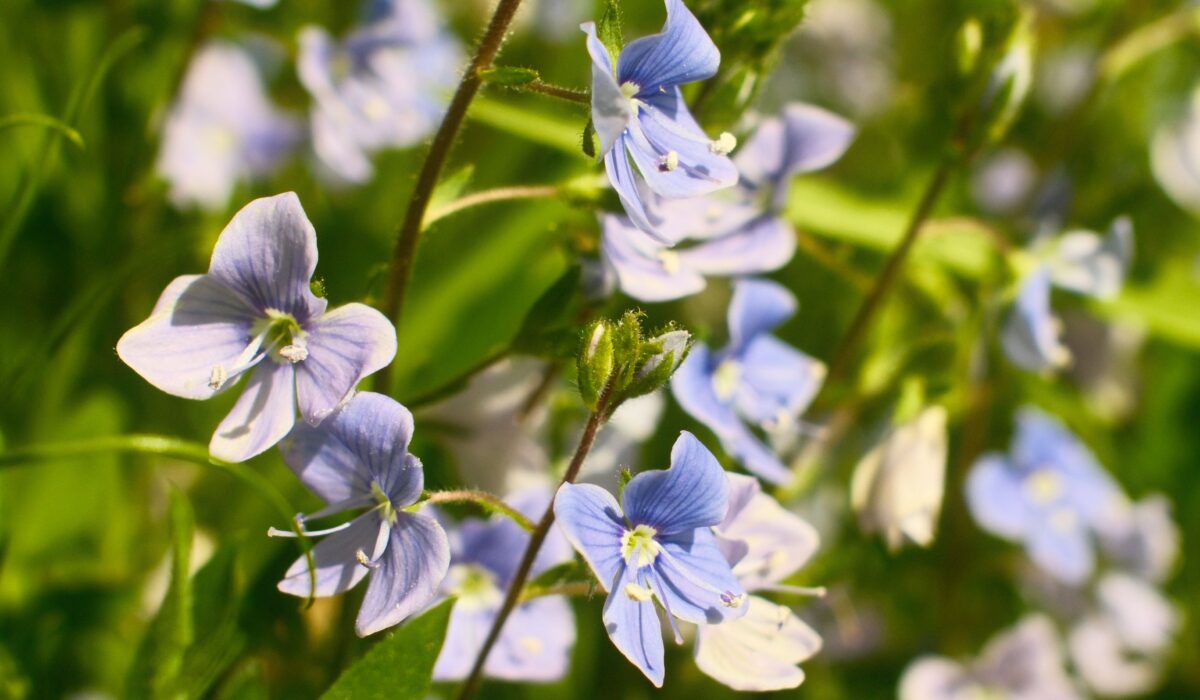
Key Takeaways
- Observing key traits like flower color, petal count, and leaf arrangement is fundamental to identifying wildflowers, according to the Lady Bird Johnson Wildflower Center (2026).
- Wildflower identification apps like Nature Lenz and Pl@ntNet offer high accuracy, with Pl@ntNet boasting the “largest annotated wildflower dataset on the planet,” according to its research consortium (2026).
- The United States is home to approximately 20,000 native plant species, highlighting the vast diversity for enthusiasts to explore, according to the USDA PLANTS Database (2023).
- Field guides, such as *Newcomb’s Wildflower Guide*, teach systematic identification by focusing on structural features, a method favored by experts like Lawrence Newcomb (1977).
- Ethical observation, including avoiding picking flowers and staying on marked trails, is crucial for wildflower conservation, as emphasized by Plantlife (2025).
For anyone eager to connect with nature and understand the botanical world around them, learning How to Identify Common Wildflowers 2026 is an incredibly rewarding pursuit. This guide will equip you with practical strategies, essential tools, and expert insights to confidently identify the vibrant flora you encounter on your outdoor adventures.
Quick Answer: To identify wildflowers, observe traits like color, shape, petal count, leaf arrangement, habitat, and bloom season. Use field guides or apps like Nature Lenz or Pl@ntNet for cross-referencing, focusing on structural features for accuracy.
What is the Easiest Way to Identify Wildflowers in 2026?
The easiest way to identify wildflowers in 2026 combines careful observation of key physical traits with the use of modern identification apps or reliable field guides. This integrated approach allows beginners to quickly narrow down possibilities and gain confidence, especially when identifying common wildflowers by color. Wildflower identification apps for 2026, for instance, can provide instant suggestions based on a photo.
For instance, botanist Lawrence Newcomb developed a systematic technique, featured in *Newcomb’s Wildflower Guide*, which simplifies the process by focusing on structural features rather than just color, making it a favorite for both amateurs and experts (1977).
My experience shows that starting with observable characteristics like bloom time and habitat significantly reduces potential matches, even before consulting a resource. This initial observation is a critical first step in learning How to Identify Common Wildflowers 2026.
Key Traits: How to Identify Wildflowers by Sight
To effectively identify wildflowers by sight, focus on a consistent set of observable characteristics that differentiate species. Understanding these traits is fundamental to learning How to Identify Common Wildflowers 2026.
The Lady Bird Johnson Wildflower Center recommends observing traits like flower color, shape, petal count, and leaf arrangement for accurate identification (2026). These details provide the most reliable clues for native wildflower identification.
Step 1: Observe Key Wildflower Traits
Begin by meticulously observing the plant’s features. This critical first step in wildflower identification tips helps you gather the necessary data for a successful match.
- Flower Color and Shape: Note the primary color, any secondary hues, and the overall shape (e.g., bell, trumpet, daisy-like). While color can vary, it’s a good starting point for common wildflowers by color.
- Petal Count: Count the number of petals, as this is often consistent within a species and a key feature for identification.
- Leaf Arrangement and Shape: Observe how leaves are arranged on the stem (alternate, opposite, whorled) and their shape (e.g., heart-shaped, lance-shaped, lobed). Learning how to identify wildflowers by leaf shape is a powerful technique.
- Plant Height and Growth Habit: Estimate the plant’s height and whether it grows as a single stem, a clump, or a vine.
- Habitat: Note the environment where the wildflower is growing, such as forest, meadow, wetland, or roadside. This context is invaluable for native wildflower identification.
A plant’s overall structure provides more consistent identification markers than just its color. In practice, I’ve found that variations in sunlight or soil can alter flower color, making structural features more dependable.
Step 2: Consult Field Guides & Local Resources
After observing the traits, consult a reliable field guide or local botanical resource to cross-reference your findings. This step is essential for confirming your initial observations and gaining confidence in How to Identify Common Wildflowers 2026.
The *Peterson Field Guides: Wildflowers of Northeastern and North Central North America* is a highly respected series known for its unique identification system, making it an excellent wildflower field guide for beginners.
- Systematic Keys: Many guides use dichotomous keys that ask a series of “either/or” questions based on plant characteristics, leading you to the correct identification.
- Illustrations and Photographs: Compare your plant to the detailed drawings or photographs in the guide. The *National Audubon Society Wildflowers of North America* guide, updated in April 2023, covers 853 species with nearly 5,200 full-color photographs, offering extensive visual references.
- Local Expertise: Botanical societies or university extension offices often have local experts who can help verify challenging identifications. The Lady Bird Johnson Wildflower Center, for example, offers extensive resources for Texas flora (2026).
What most people miss is that a good field guide teaches you *how* to look at a plant, not just what to look for. This foundational knowledge is crucial for long-term success in wildflower identification tips.
Best Wildflower Identification Apps for 2026
The best wildflower identification apps for 2026 leverage artificial intelligence and vast databases to provide quick and relatively accurate identification from a photo. These digital tools have revolutionized How to Identify Common Wildflowers 2026 for many enthusiasts.
Wildflower identification apps like Pl@ntNet achieved 91% top-1 and 98% top-3 accuracy in field tests for wildflowers, demonstrating their reliability, according to Nature Lenz (2026).
Step 3: Utilize Identification Apps Effectively
Utilizing identification apps effectively means understanding their strengths and limitations, and providing them with the best possible data. This is key to getting accurate results from any plant identification app for 2026.
- Nature Lenz: Often highlighted as the “best overall for hikers” in 2026, Nature Lenz offers wildflower-tuned AI and operates without a paywall, making it a highly accessible option for wildflower identification.
- Pl@ntNet: Backed by a French research consortium including Cirad, INRA, INRIA, and IRD, Pl@ntNet is recognized for its accuracy, especially for field botany, and boasts the “largest annotated wildflower dataset on the planet” (2026). Its academic backing provides a strong foundation for its extensive database.
- Seek by iNaturalist: Recommended for offline use and its community-verified database, Seek by iNaturalist is excellent for areas without internet access and encourages citizen science contributions. This app makes learning How to Identify Common Wildflowers 2026 an interactive experience.
The key insight here is that while apps are powerful, they are tools, not infallible experts. Always try to cross-reference an app’s suggestion with other details you observe.
How to Identify Wildflowers Without an App
To identify wildflowers without an app, rely on traditional botanical methods such as detailed observation, systematic field guides, and consultation with local experts. This approach to plant identification without an app emphasizes foundational botanical skills.
Lawrence Newcomb’s technique, detailed in *Newcomb’s Wildflower Guide*, provides a structured method for identification based on structural features, which remains highly effective for learning How to Identify Common Wildflowers 2026 (1977).
Step 4: Consider Habitat & Bloom Season
Considering the habitat and bloom season is a crucial step in narrowing down identification possibilities, particularly when you’re learning how to identify plants without an app. This ecological context is a powerful identifier.
- Habitat Clues: Is the plant in a dry, sandy area, a moist forest, or an open field? Specific wildflowers thrive in particular environments. For example, the 2026 Death Valley “superbloom” featured species like Desert Gold and Phacelia, which are adapted to arid conditions following significant rainfall in late 2025 and early 2026.
- Bloom Season: Knowing when a plant typically flowers can eliminate many species. Carolina jessamine (Gelsemium sempervirens), named the Wildflower of the Year by the Lady Bird Johnson Wildflower Center in 2026, is known for its early spring blooms.
Andrea DeLong-Amaya, a horticulture educator at the Lady Bird Johnson Wildflower Center, stated in March 2026 that “In a state as geographically vast and varied as Texas, it’s rare that we can make a forecast that suits the whole state” regarding wildflower blooms, highlighting the impact of microclimates and weather fluctuations on bloom times.
Finding Regional & Seasonal Wildflower Guides
Finding regional and seasonal wildflower guides involves seeking out resources specific to your geographical area and the time of year. This localized knowledge is paramount for accurate native wildflower identification.
The USDA PLANTS Database provides extensive information on native plant species across the United States, which is essential for regional identification, according to the Department of Agriculture (2023).
Step 5: Practice Ethical Observation
Practicing ethical observation ensures that your enjoyment of wildflowers doesn’t harm the delicate ecosystems they inhabit. This responsibility is an integral part of learning How to Identify Common Wildflowers 2026.
- Leave No Trace: Avoid picking wildflowers, disturbing soil, or leaving trash. Some native wildflower species have been observed to spread less than 10 meters in seventy years on their own, highlighting the need for active restoration and minimal disturbance, according to the SUNY ESF Wildflower Restoration Project (2024).
- Stay on Trails: Wandering off marked paths can damage fragile plants and compact soil.
- Observe Respectfully: Use binoculars for close-up views rather than getting too close and potentially trampling plants. This respects the natural environment and contributes to wildflower conservation.
The 2026 Carrizo Plain super bloom in California, documented by NASA’s Earth Observatory and confirmed by the California Native Plant Society, drew significant attention, emphasizing the need for respectful viewing practices to preserve such natural wonders.
Ethical Wildflower Observation & Conservation
Ethical wildflower observation and conservation means engaging with wildflowers in a way that protects their habitats and promotes their long-term survival. This is a crucial aspect of understanding How to Identify Common Wildflowers 2026 responsibly.
Plantlife, a conservation charity, emphasizes that avoiding picking flowers and staying on designated paths are fundamental practices for protecting wild flora (2025).
Citizen Science Contributions
Beyond personal identification, you can contribute to wildflower conservation through citizen science. Platforms like iNaturalist, which powers Seek by iNaturalist, allow users to upload observations that contribute to scientific data, aiding researchers in tracking plant populations and distributions.
The United States has approximately 20,000 native plant species, making citizen science contributions invaluable for monitoring biodiversity, according to the USDA PLANTS Database (2023). Your observations can help paint a clearer picture for botanists.
For example, data from the Department of Agriculture, updated in November 2025, highlights that on-farm wildflower plantings can generate opposing reproductive outcomes for solitary and bumble bee species, indicating complex ecological interactions that citizen science can help track.
Troubleshooting Common Wildflower Identification Challenges
Troubleshooting common wildflower identification challenges often involves a systematic review of your observations, cross-referencing multiple sources, and understanding natural variations. This methodical approach helps clarify difficult identifications and improve your skills in How to Identify Common Wildflowers 2026.
Larry Stein, a professor at Texas A&M’s AgriLife Extension Service, noted in March 2026 that Texas wildflowers were “skeletons of what they should be” in some regions due to insufficient precipitation, illustrating how environmental factors can alter plant appearance and challenge identification.
Step 6: Confirm Your Identification
Confirming your identification involves taking extra steps to ensure accuracy, especially when dealing with similar-looking species or plants that don’t quite match guide images. This final check is vital for confident wildflower identification.
- Look for Distinctive Features: Sometimes a tiny hair, a specific scent, or a subtle pattern on the stem is the definitive characteristic.
- Consult Multiple Sources: If an app gives a “confidently wrong” answer or you’re unsure, compare it with a field guide and a reputable online database.
- Seek Expert Opinion: Local botanical societies or university extension services can provide expert verification for challenging specimens.
- Consider Variations: Plants can look different depending on age, soil, sunlight, and water availability. The 2026 wildflower season in Texas is predicted to be varied due to uneven rainfall, with 74% of the state in drought as of late February 2026, according to the Texas Water Development Board (2026), leading to significant regional differences in bloom quality.
One common pitfall is misidentifying a plant based solely on flower color, which can be highly variable. Focusing on leaf arrangement, stem characteristics, and overall plant structure provides a more robust framework for learning How to Identify Common Wildflowers 2026.
Frequently Asked Questions
What is the easiest way to identify wildflowers?
The easiest way to identify wildflowers is by using a combination of observing key physical traits like flower color and leaf shape, then cross-referencing with a reliable identification app. Wildflower identification apps for 2026, such as Nature Lenz, offer quick, AI-powered suggestions based on photos.
What is the best free app to identify wildflowers?
Pl@ntNet is widely considered one of the best free apps to identify wildflowers, known for its extensive database and accuracy. It is supported by a French research consortium, providing a robust platform for identifying common wildflowers by color and other features (2026).
How do you identify a wildflower by its leaves?
To identify a wildflower by its leaves, observe their arrangement (alternate, opposite, whorled), shape (e.g., lobed, entire, toothed), and venation patterns. Learning how to identify wildflowers by leaf shape is a fundamental botanical skill, often more consistent than flower color.
What are the 6 traits to identify a wildflower?
The six key traits to identify a wildflower are flower color, flower shape, petal count, leaf arrangement, leaf shape, and overall plant height/growth habit. These systematic observations are crucial for accurate native wildflower identification, as taught in *Newcomb’s Wildflower Guide* (1977).
How do you identify a flower without an app?
You identify a flower without an app by closely observing its physical characteristics (flower, leaves, stem), noting its habitat and bloom season, and then consulting a detailed physical field guide. The *Peterson Field Guides* series offers excellent resources for plant identification without app reliance.
Learning How to Identify Common Wildflowers 2026 is a journey that blends careful observation with powerful tools and a commitment to conservation. By systematically examining key traits, utilizing cutting-edge apps and time-tested field guides, and always practicing ethical observation, you’ll not only enhance your outdoor experiences but also contribute to a deeper appreciation and protection of our natural world. Embrace the adventure, and discover the hidden botanical treasures around you.