
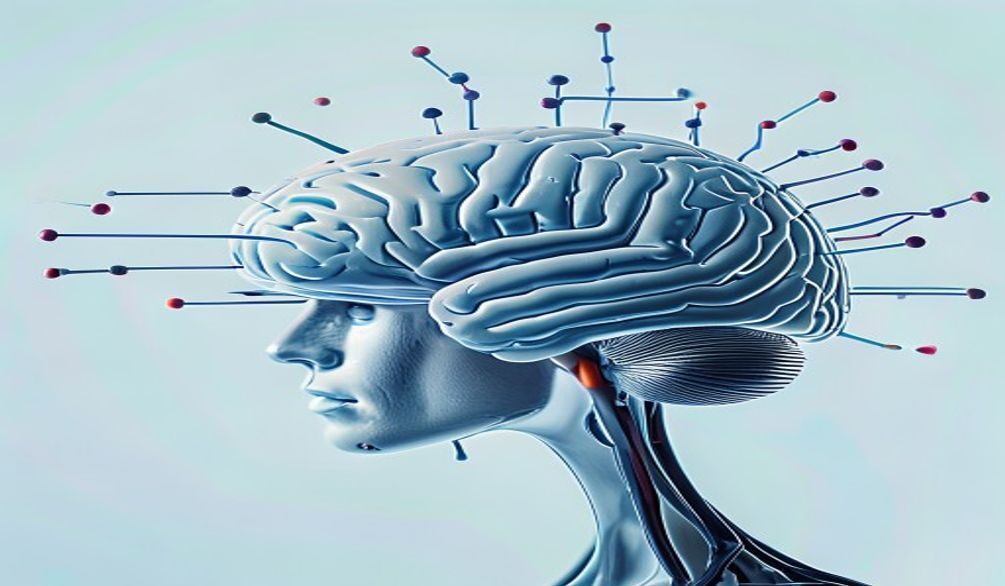
Key Takeaways
- The global BCI market is projected to reach USD 2.75 billion in 2026, according to Coherent Market Insights.
- Non-invasive BCI technologies are expected to hold 61.7% of the market share in 2026 due to user preference for safety.
- Neuralink has expanded its N1 chip trial to over a dozen participants by early 2026, enabling thought control for paralyzed patients.
- Synchron’s minimally invasive Stentrode device is in a pivotal trial planned for 2026, offering a safer alternative to direct implants.
- Gestala, a Chinese startup, announced a non-invasive ultrasound-based BCI in January 2026, capable of accessing deeper brain regions.
Are you curious about the cutting-edge advancements shaping how we interact with technology using our minds? This year, the **Top Brain-Computer Interface Innovations 2026** are not just theoretical concepts but tangible breakthroughs, bringing us closer to seamless human-machine interaction. You’ll discover the essential tech redefining neurological treatment, assistive devices, and even consumer experiences.
Quick Answer: The Top Brain-Computer Interface Innovations 2026 include advancements in invasive (Neuralink), minimally invasive (Synchron), and non-invasive (Gestala) BCI technologies. AI-powered neuroprostheses and advanced cortical arrays are making significant strides in human-machine interaction this year.
What are Brain-Computer Interfaces (BCI) in 2026?
Brain-Computer Interfaces (BCI) in 2026 are direct communication pathways between the brain and an external device, enabling control of technology through thought. These sophisticated systems translate neural signals into commands, bypassing traditional motor pathways to restore function or augment human capabilities. The market for BCI technology is robust, with the global brain-computer interface market estimated to be valued at USD 2.75 billion in 2026, according to Coherent Market Insights.
In practice, BCIs represent a profound leap in human-machine interaction. They offer unprecedented potential for individuals with neurological disorders to regain independence. Understanding the nuances of these systems is key to appreciating the **Top Brain-Computer Interface Innovations 2026**.
BCI technology is broadly categorized into three types:
- Invasive BCIs: These require surgical implantation directly into the brain, offering high signal fidelity but carrying surgical risks. Neuralink’s N1 chip is a prime example of this category.
- Minimally Invasive BCIs: Devices like Synchron’s Stentrode are implanted within blood vessels, providing a balance of signal quality and reduced invasiveness. They are gaining significant traction in clinical trials.
- Non-Invasive BCIs: These systems, such as EEG-based devices or Gestala’s ultrasound technology, are worn externally and are safer and easier to use, though they typically offer lower signal resolution.
Each type serves distinct purposes and user needs, contributing to the diverse landscape of **Top Brain-Computer Interface Innovations 2026**. The ongoing research in all these areas promises continued breakthroughs.
Why is the BCI Market Accelerating in 2026?
The BCI market is accelerating in 2026 due to a powerful convergence of technological advancements, increased investment, and a growing demand for innovative healthcare solutions. Luca Giani, senior principal at Alumni Ventures, noted in June 2026 that “There is a huge convergence of material science, the miniaturization of electronics and artificial intelligence to decode signals, along with a more favorable regulatory environment,” which has rapidly moved BCIs from labs to human trials. This synergy is creating fertile ground for the **Top Brain-Computer Interface Innovations 2026**.
What most people miss is how crucial AI integration has become beyond just signal decoding. Advanced AI, including generative AI and transformer architectures, is fundamentally transforming the entire BCI development pipeline, from data acquisition to personalized neuro-digital symbiosis. This sophisticated AI integration in brain-computer interfaces is a major driver for the market’s rapid expansion.
Several factors contribute to this acceleration:
- Technological Maturity: Miniaturization of electronics, improved biocompatible materials, and advanced signal processing algorithms (often AI-driven) have made BCI devices more effective and safer.
- Increased Investment: Implantable BCIs have attracted significant investor attention, raising $1.13 billion across 6 deals over the past 24 months as of July 2026, representing 54.75% of all disclosed capital. This substantial funding fuels research and development, propelling the **Top Brain-Computer Interface Innovations 2026**.
- Growing Demand: The rising prevalence of neurological disorders, an aging global population, and the pursuit of human augmentation drive demand for effective BCI solutions. North America is expected to dominate the BCI market with an estimated share of 40.8% in 2026, reflecting robust research and funding.
- Favorable Regulatory Environment: As BCI technology matures, regulatory bodies are adapting, creating clearer pathways for clinical trials and market approval, further accelerating adoption. This provides a more predictable landscape for companies developing **Top Brain-Computer Interface Innovations 2026**.
The Top 5 Brain-Computer Interface Innovations of 2026
The **Top Brain-Computer Interface Innovations 2026** are fundamentally reshaping human-machine interaction, offering unprecedented control and communication for individuals with neurological conditions and hinting at future augmentation. These breakthroughs span invasive, minimally invasive, and non-invasive approaches, each pushing the boundaries of neurotechnology. The healthcare segment, particularly rehabilitation and restoration, is acquiring a prominent share this year due to increasing neurological disorders, according to Coherent Market Insights (2026).
Here are the five most significant innovations making waves in 2026:
Neuralink N1 Chip: Invasive Precision for Direct Control
Neuralink continues to lead in invasive hardware performance with its N1 chip, significantly advancing the field of **Top Brain-Computer Interface Innovations 2026**. By early 2026, Neuralink had expanded its trial to over a dozen participants, demonstrating remarkable progress in enabling paralyzed patients to control external devices with thought alone. Its valuation surpassed $8 billion by 2026, underscoring investor confidence.
One of the most compelling examples is Noland Arbaugh, a paralyzed patient who has publicly demonstrated controlling a computer cursor and playing video games using the Neuralink implant. This capability highlights the transformative potential of invasive BCIs for restoring independence and quality of life. The N1 chip’s ultra-fine threads and high channel count allow for robust neural signal acquisition.
Synchron Stentrode: Minimally Invasive Safety and Efficacy
Synchron’s Stentrode device represents a pivotal advancement in minimally invasive BCI technology, offering a potentially safer alternative to direct brain implants while maintaining high functionality. The Stentrode, which is FDA-cleared and in a pivotal trial planned for 2026, is implanted via the jugular vein, navigating to a blood vessel on the surface of the motor cortex. This endovascular approach significantly reduces the risks associated with open-brain surgery.
Synchron has raised over $270 million in funding, reflecting strong support for its less invasive approach among the **Top Brain-Computer Interface Innovations 2026**. Patients using the Stentrode have successfully achieved hands-free control of digital devices, demonstrating its efficacy in communication and daily tasks.
Precision Neuroscience Layer 7 Cortical Array: Enhanced Signal Acquisition
Precision Neuroscience achieved a significant milestone with its first 510(k) clearance in April 2025 for its Layer 7 cortical surface array. This innovative device has been tested intraoperatively in 37 patients, demonstrating a favorable risk-benefit profile without penetrating brain tissue. The Layer 7 array is designed to conform to the brain’s surface, capturing high-resolution neural signals with minimal invasiveness.
This technology is crucial for advancing the understanding of brain activity and developing more sophisticated neuroprostheses. Its ability to provide detailed cortical data without direct tissue penetration positions it as a key player in the **Top Brain-Computer Interface Innovations 2026**.
NeuroPace RNS System: Proven Clinical Viability for Epilepsy
NeuroPace’s RNS System stands out as an FDA-approved and reimbursed invasive BCI specifically designed for drug-resistant focal epilepsy. This system demonstrates the commercial viability and long-term clinical evidence of approved BCI products, setting a precedent for future medical applications. The RNS System continuously monitors brain activity and delivers targeted stimulation to prevent seizures.
The long-term success and reimbursement status of the NeuroPace RNS System provide a critical blueprint for how other **Top Brain-Computer Interface Innovations 2026** can achieve widespread adoption in clinical settings. Its impact on improving the lives of epilepsy patients is substantial.
Gestala: Non-Invasive Ultrasound BCI for Deep Brain Access
Gestala, a pioneering Chinese startup, announced a groundbreaking development in January 2026: a non-invasive ultrasound-based BCI capable of accessing deeper brain regions without surgical implantation. This innovation represents a strategic shift towards achieving implant-level functionality through external, non-invasive architectures, addressing a major accessibility challenge for **Top Brain-Computer Interface Innovations 2026**.
This technology could democratize BCI access, making advanced brain control available to a much wider population. The ability to interact with deeper brain structures without surgery could unlock new therapeutic avenues and consumer applications, signaling a significant leap in non-invasive BCI advancements 2026.
Which Companies Lead Brain-Computer Interface Innovation in 2026?
The landscape of brain-computer interface innovation in 2026 is dominated by a few key players, both established and emerging, who are pushing the boundaries of what’s possible in neurotechnology. These companies are not only developing groundbreaking devices but also navigating the complex regulatory and ethical terrains of this nascent field. The **Top Brain-Computer Interface Innovations 2026** are largely a product of their relentless research and development.
Leading the charge are companies like Neuralink, Synchron, and Precision Neuroscience, each with distinct approaches:
- Neuralink: With its invasive N1 chip, Neuralink focuses on high-bandwidth, direct brain communication for severe neurological conditions, aiming for a future of widespread human augmentation. Their rapid progress in human trials positions them at the forefront of the **Top Brain-Computer Interface Innovations 2026**.
- Synchron: Synchron’s minimally invasive Stentrode prioritizes safety and ease of implantation, making it an attractive option for patients and clinicians alike. Their FDA clearance and pivotal trial signify a strong path to commercialization for their BCI for paralysis communication.
- Precision Neuroscience: This company is carving a niche with its Layer 7 cortical surface array, offering high-resolution data acquisition without penetrating brain tissue, which could be ideal for diagnostics and less invasive therapeutic applications.
- NeuroPace: With its RNS System, NeuroPace has demonstrated a successful commercial model for an FDA-approved BCI, proving that long-term clinical efficacy and reimbursement are achievable in the market for **Top Brain-Computer Interface Innovations 2026**.
- Gestala: As an innovator in non-invasive technology, Gestala is challenging the notion that high-fidelity BCI requires surgery, potentially opening up new markets beyond traditional medical applications.
These companies, alongside academic institutions like UC Berkeley and UCSF, which made strides in March 2025 with their brain-to-voice neuroprosthesis solving latency problems, are defining the future of neurotechnology. Their work illustrates the diverse approaches being taken to realize the full potential of BCIs. For more on how AI is transforming medical fields, consider reading about AI in Healthcare Diagnostics 2026: Essential Guide.
Ethical Considerations & Accessibility Challenges for BCI in 2026
Ethical considerations and accessibility challenges are paramount for BCI in 2026, as these advanced technologies raise profound questions about mental privacy, cognitive liberty, and equitable access. As the **Top Brain-Computer Interface Innovations 2026** become more sophisticated, the need for robust ethical frameworks and governance becomes increasingly urgent. Dr. Ignacio Saez, Director of the Laboratory for Human Neurophysiology at the Icahn School of Medicine at Mount Sinai, highlighted in July 2026 that decoding thought for cognitive disorders requires fundamentally different ethical approaches than motor applications.
The rapid development of BCI technology necessitates proactive discussions and regulatory efforts to ensure responsible innovation. What most people miss is that without careful planning, the benefits of BCIs could exacerbate existing inequalities.
Key ethical and accessibility challenges include:
- Mental Privacy: The ability to decode thoughts and intentions raises concerns about protecting an individual’s mental privacy from unauthorized access or surveillance. This is a critical aspect of ethical BCI development.
- Cognitive Liberty: Questions arise about the right to self-determination over one’s own brain and mental processes, particularly if BCIs could be used for cognitive enhancement or alteration.
- Data Security: The highly sensitive neural data collected by BCIs requires stringent security measures to prevent misuse, breaches, or unauthorized access.
- Digital Divide: There is a significant risk that the high cost and specialized medical requirements of advanced BCIs could create a new digital divide, limiting access to only the affluent. Ensuring equitable distribution is a major challenge for the **Top Brain-Computer Interface Innovations 2026**.
- Regulatory Frameworks: Developing comprehensive and adaptable regulatory frameworks that can keep pace with rapid technological advancements is essential for both innovation and protection. The EU AI Act, for instance, provides a general template but specific BCI ethical considerations 2026 are still evolving.
Addressing these challenges is not merely a legal or philosophical exercise; it is fundamental to the long-term success and societal acceptance of BCI technology.
Are Consumer Brain-Computer Interfaces Available in 2026?
Yes, consumer brain-computer interfaces are available in 2026, primarily in the non-invasive category, offering applications ranging from wellness and productivity to gaming. While implantable devices like Neuralink are still largely in clinical trials for medical purposes, non-invasive BCI technologies are projected to hold the largest market share of 61.7% in 2026 due to user preference for safety and ease of use. These devices provide a glimpse into the future of human-machine interaction.
The market for consumer-grade BCIs is expanding rapidly, driven by advancements in signal processing and miniaturization. These devices typically use electroencephalography (EEG) to detect brainwave patterns, allowing users to interact with software or enhance cognitive functions without surgery. The **Top Brain-Computer Interface Innovations 2026** are making this more accessible.
Common consumer BCI applications include:
- Gaming and Entertainment: Non-invasive BCIs allow users to control game characters or VR environments with their thoughts, offering immersive new experiences.
- Focus and Meditation Aids: Devices that provide real-time feedback on brain activity can help users train their focus, reduce stress, and improve meditation practices.
- Productivity Tools: Some consumer BCIs aim to enhance productivity by monitoring cognitive states and providing insights into concentration levels or mental fatigue.
- Sleep Tracking: Advanced non-invasive BCIs can