
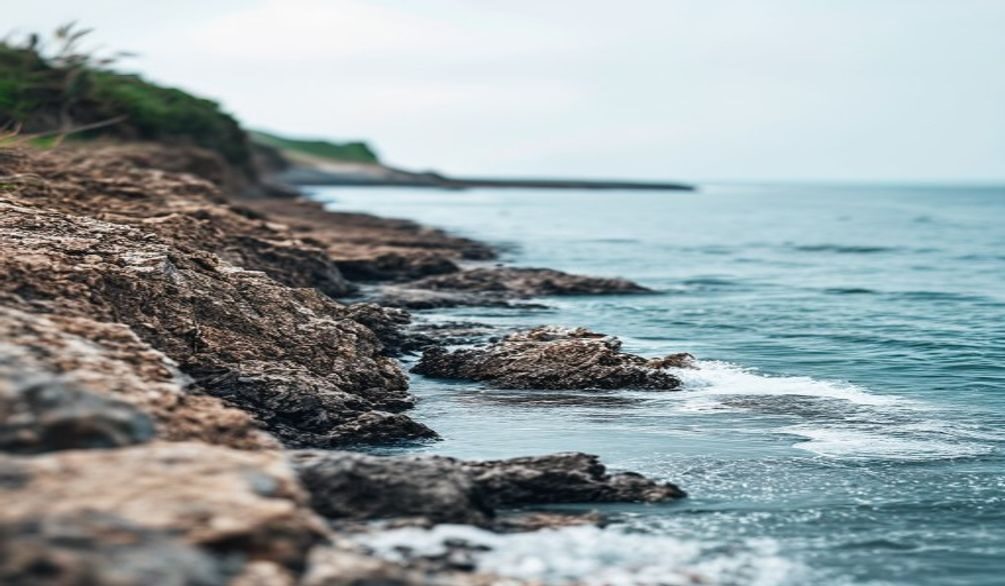
Key Takeaways
- Global average sea level along the U.S. coastline is projected to rise 10 to 12 inches by 2050, according to the US EPA (2026).
- Coastal erosion costs the United States approximately $500 million annually in property loss and land damage.
- Nearly half of the world’s beaches could vanish by the century’s end due to climate change and human development, warned Omar Defeo (2025).
- Caribbean island nations face losing up to 3,900 km² of land by 2050, with an economic value of up to US$624 billion, according to the Global Center on Adaptation (2025).
- Measured coastal sea level is globally 0.24-0.27 meters higher than assumed in most hazard assessments, as reported in a Nature study (2026).
Are you concerned about the disappearing coastlines and the increasing threats to coastal communities? Then this Understanding Coastal Erosion Guide 2026 is precisely what you need. This comprehensive guide will equip you with essential knowledge about the causes, impacts, and cutting-edge solutions for coastal erosion, helping you grasp this critical environmental challenge.
Quick Answer: Coastal erosion is the process by which natural forces like waves, currents, tides, and wind gradually wear away or transport coastal land. It’s intensified by sea level rise and human activities, leading to land loss, habitat destruction, and significant socio-economic impacts.
What is Coastal Erosion and Why is it a Critical Issue in 2026?
Coastal erosion is the natural and human-induced process where coastal landforms are gradually worn away or moved by dynamic forces like waves, currents, tides, and wind. This phenomenon is a critical issue in 2026 because of accelerated climate change impacts, with global average sea level along the U.S. coastline projected to rise 10 to 12 inches by 2050, according to the US EPA (2026).
This ongoing land loss threatens vital ecosystems, infrastructure, and human settlements worldwide. The urgency of understanding coastal erosion guide 2026 stems from the escalating rate at which shorelines are retreating, impacting everything from property values to national security.
Coastal erosion is responsible for approximately $500 million per year in coastal property loss in the United States, including damage to structures and loss of land. This financial burden underscores the immediate need for effective coastal management strategies.
The severity of coastal erosion is intensified by human activities such as coastal development, sand mining, and the construction of hard structures that disrupt natural sediment flow. A comprehensive Understanding Coastal Erosion Guide 2026 must address both natural and anthropogenic factors.
What are the Primary Causes of Coastal Erosion?
The primary causes of coastal erosion are a complex interplay of natural processes and human activities that destabilize coastal environments. One of the most significant drivers is sea level rise, which increases the frequency and intensity of coastal flooding and storm surges.
Natural factors contributing to beach erosion causes include powerful wave action, strong currents, tidal fluctuations, and wind. Storm events, such as hurricanes and nor’easters, can cause significant erosion in a very short period, often shifting vast amounts of sand and altering shorelines dramatically.
Sediment supply plays a crucial role; when the rate of sediment transport away from a coastline exceeds the rate of sediment delivery, erosion occurs. This imbalance can be exacerbated by dams on rivers that trap sediment, preventing it from reaching coastal areas.
Geological characteristics also influence erosion rates, with soft, unconsolidated coastlines like sandy beaches eroding faster than rocky cliffs. For a complete Understanding Coastal Erosion Guide 2026, recognizing these varied factors is essential.
Human Activities Intensifying Erosion
Human activities significantly amplify coastal erosion, often through altering natural coastal processes. Coastal development, including the construction of buildings and infrastructure too close to the shoreline, reduces the natural buffer zones like dunes and wetlands.
Sand mining, the removal of sand from beaches or nearshore areas for construction, directly depletes the natural sediment supply, accelerating land loss. The construction of hard structures like seawalls and groins, while intended to protect specific areas, can often starve adjacent beaches of sand, leading to increased erosion elsewhere. These interventions highlight a key challenge in comprehensive coastal resilience planning.
Beyond Property: The Socio-Economic and Cultural Impacts of Coastal Erosion
Coastal erosion extends its destructive reach far beyond mere property loss, inflicting profound socio-economic and cultural impacts on affected communities. The displacement of residents, loss of livelihoods, and damage to vital infrastructure represent significant human costs.
For many coastal communities, erosion can lead to forced migration and the breakdown of social networks. Uruguayan marine scientist Omar Defeo warned in November 2025 that nearly half of the world’s beaches could disappear by the end of the century due to climate-driven sea level rise and human development, directly threatening tourism economies and local identities.
The Global Center on Adaptation reported in October 2025 that across the Caribbean, island nations are expected to lose up to 3,900 km² of land to rising seas and erosion by 2050, with an estimated economic value of US$406 billion to US$624 billion. This staggering figure illustrates the immense financial pressure on vulnerable regions.
Coastal erosion also threatens irreplaceable cultural heritage sites, including historical landmarks, ancestral burial grounds, and sacred spaces for indigenous communities. The loss of these sites represents an irreversible blow to cultural identity and history, a crucial aspect for any Understanding Coastal Erosion Guide 2026.
Psychological impacts, such as anxiety, stress, and a sense of loss, are prevalent among populations facing the constant threat of a disappearing coastline. The erosion of land often means the erosion of a way of life, affecting mental health and community well-being.
How Can We Prevent Coastal Erosion? Solutions and Strategies for 2026
Preventing coastal erosion involves a combination of engineering solutions, nature-based approaches, and adaptive management strategies designed to protect and restore vulnerable shorelines. Effective coastal erosion solutions 2026 prioritize both immediate protection and long-term sustainability.
Nature-Based Solutions
Nature-based solutions leverage natural systems to reduce erosion and enhance coastal resilience. These approaches are often more sustainable and provide additional ecological benefits.
* Living Shorelines: These involve using natural materials like oyster reefs, salt marshes, and mangroves to stabilize shorelines, reduce wave energy, and filter water. The US EPA (2026) actively promotes green infrastructure and living shorelines as effective solutions for coastal protection.
* Dune Restoration: Planting native vegetation and constructing sand fences help rebuild and stabilize dunes, which act as natural barriers against storm surges and high tides.
* Artificial Reefs: Structures like the Living Breakwaters project in Staten Island, NY, use artificial reefs to attenuate wave energy and foster marine ecosystems. ReefBlocks, a next-generation artificial reef technology with installations planned for late 2025 and early 2026, offers modular units designed to mimic natural reefs and protect beaches. This innovative approach is a key part of an Understanding Coastal Erosion Guide 2026.
* Wetland Creation/Restoration: Restoring coastal wetlands helps absorb floodwaters, reduce wave impacts, and provide critical habitats. For insights into broader ecosystem management, you might explore resources like an Understanding Desert Ecosystems 2026 guide, although the specific challenges differ.
Engineered Solutions
Traditional engineered solutions, often called “hard structures,” are designed to physically block or redirect erosive forces.
* Seawalls and Revetments: These rigid structures are built parallel to the shoreline to protect land from wave action. While effective locally, they can sometimes lead to increased erosion on adjacent beaches.
* Groins and Jetties: Structures built perpendicular to the shore to trap sand and maintain beach width. They can, however, starve down-drift beaches of sediment.
* Beach Nourishment: The process of adding sand to beaches to widen them and increase their protective capacity. This is a common but often temporary solution requiring periodic replenishment. Charleston, SC, for example, is addressing erosion by combining engineered stormwater solutions with ecological approaches.
Prof Andrew Shepherd, Director of the Centre for Polar Observation and Modelling, stated in March 2026 that “Sea levels are much higher than we had thought – about 30 cm higher – due to the swell of ocean currents.” This critical insight underscores the urgency and scale required for effective coastal management strategies. An Understanding Coastal Erosion Guide 2026 must incorporate this new understanding.
Challenges and Conflicts in Implementing Coastal Erosion Solutions
Implementing effective coastal erosion solutions is often fraught with significant challenges and conflicts, ranging from funding limitations to legal disputes and unintended environmental consequences. One major hurdle is the sheer cost of large-scale projects, with federal budget cuts for initiatives like beach nourishment often leaving local communities struggling to secure necessary funds.
The North Wildwood, NJ shoreline battle provides a stark example, where attempts to build a new seawall led to legal clashes with state environmental agencies over permits and environmental impacts. This highlights the complex balance between urgent erosion control and adherence to environmental policy.
Another challenge is the “not in my backyard” (NIMBY) phenomenon, where communities may resist projects like managed retreat or large-scale infrastructure changes due to perceived impacts on property values or local character. These localized resistances can significantly delay or derail essential coastal resilience projects.
Furthermore, many engineering solutions, while effective in one area, can inadvertently worsen erosion in another. Groins, for instance, trap sand on one side but can starve beaches down-drift, leading to increased erosion. This interconnectedness makes a holistic Understanding Coastal Erosion Guide 2026 vital.
The underestimation of sea-level rise in current models, as highlighted by Prof Andrew Shepherd (2026), adds another layer of complexity. Planning based on outdated projections can lead to insufficient or quickly obsolete solutions, requiring constant adaptation and reassessment.
Regional Specificity: How Coastal Erosion Manifests Differently
Coastal erosion manifests differently across regions, influenced by unique geological features, localized climate patterns, and specific human activities. Understanding these regional variations is crucial for developing tailored and effective coastal management strategies.
For instance, sandy coasts, common along the U.S. East Coast, experience rapid beach erosion causes due to dynamic wave action and frequent storm events. Barrier islands, like those in North Carolina or the Gulf Coast, are particularly vulnerable as they are low-lying and naturally migratory, constantly reshaping in response to storms and sea level rise.
In contrast, rocky coasts and cliffs, often found in parts of California or the UK, erode through processes like hydraulic action, abrasion, and freeze-thaw weathering, often leading to dramatic cliff collapses. The U.S. National Park Service, for example, addresses coastal adaptation differently at various sites; Acadia National Park rehabilitates stream crossings, while Assateague Island National Seashore relocates facilities threatened by erosion (2025).
Localized human activities, such as sand mining in specific bays or extensive coastal development on artificial islands, can create unique “micro-erosion intensity” patterns. These localized pressures often exacerbate natural processes, creating hotspots of severe erosion that require highly specific interventions. This level of detail is critical for any comprehensive Understanding Coastal Erosion Guide 2026.
The impact of sea level rise on coasts also varies significantly. While a global average exists, regional deviations can exceed 1 meter in areas like the Indo-Pacific, as reported in a Nature study (2026). This means that some regions face a far more immediate and severe threat than others, demanding more urgent and robust coastal resilience projects.
Adaptive Management and Future Coastal Policy for 2026
Adaptive management and forward-thinking coastal policy are essential for effectively addressing coastal erosion in 2026 and beyond, recognizing the dynamic nature of coastlines and the uncertainties of climate change. This approach involves continuously monitoring coastal changes, evaluating the effectiveness of implemented solutions, and adjusting strategies as new data and conditions emerge.
A key aspect of future coastal policy is the integration of climate change impacts, particularly the latest sea level rise projections, into all planning and development decisions. The current understanding that measured coastal sea level is globally 0.24-0.27 meters higher than previously assumed, according to a Nature study (2026), necessitates a recalibration of existing models and hazard assessments.
Policies must increasingly support nature-based coastal protection, recognizing the long-term benefits of green infrastructure over hard structures. This includes incentivizing the restoration of mangroves, salt marshes, and coral reefs, which provide natural buffers and ecological services.
Managed retreat, a strategy where communities plan to move infrastructure and populations away from vulnerable coastlines, is gaining traction as a long-term solution, despite its social complexities. The U.S. National Park Service incorporates climate change response into management plans for parks like Assateague Island National Seashore, which includes relocating visitor facilities threatened by erosion (2025).
An effective Understanding Coastal Erosion Guide 2026 emphasizes the shift towards holistic risk assessment that considers not just property loss, but also the ecological impacts of losing wetlands and the ability of natural systems to draw down CO2, as highlighted by experts reacting to the Nature paper (2026). This holistic view is crucial for the future of coastal communities.
Frequently Asked Questions
What are the 5 causes of coastal erosion?
The five primary causes of coastal erosion are powerful wave action, strong currents, sea level rise, human activities like coastal development and sand mining, and severe storm events. These factors often interact, accelerating land loss along shorelines.
For example, the US EPA (2026) projects a 10 to 12-inch sea level rise along the U.S. coastline by 2050, intensifying all other erosive forces. Understanding these causes helps in developing targeted mitigation strategies.
What is coastal erosion and its effects?
Coastal erosion is the process where natural forces and human activities wear away or transport coastal land, leading to significant land loss. Its effects include property destruction, habitat degradation, loss of cultural heritage sites, and substantial socio-economic impacts on coastal communities.
Coastal erosion is responsible for approximately $500 million per year in coastal property loss in the United States, according to economic assessments. Addressing these effects requires comprehensive coastal management strategies.
What is the main cause of coastal erosion?
While multiple factors contribute, the main overarching cause of coastal erosion is the **dynamic interaction between rising sea levels and intensified wave energy**, exacerbated by human alterations to coastal environments. Sea level rise directly increases the vulnerability of shorelines to erosion.
Prof Andrew Shepherd (2026) noted that sea levels are about 30 cm higher than previously thought, significantly amplifying erosion risks globally. This makes adapting to higher sea levels a critical challenge for coastal resilience.
What are the examples of coastal erosion?
Examples of coastal erosion include the rapid beach loss experienced in North Wildwood, NJ, the retreat of barrier islands along the U.S. Gulf Coast, and the disappearance of significant portions of beaches worldwide. These instances highlight the visible impact of erosive forces.
Omar Defeo (2025) warned that nearly half of the world’s beaches could disappear by the end of the century. These examples underscore the urgent need for effective coastal protection measures.
How can we prevent coastal erosion?
Coastal erosion can be prevented or mitigated through a combination of nature-based solutions like living shorelines and dune restoration, and engineered solutions such as seawalls, groins, and beach nourishment. Adaptive management and sustainable coastal planning are also crucial.
The US EPA (2026) advocates for green infrastructure and living shorelines as effective nature-based coastal protection strategies. Implementing a mix of these strategies offers the best chance for long-term coastal resilience.
The insights provided in this Understanding Coastal Erosion Guide 2026 are crucial for anyone seeking to grasp the complexities of our changing coastlines. By understanding the causes, impacts, and a range of solutions, you can contribute to informed decisions and support sustainable coastal resilience efforts. The future of coastal communities depends on our collective action and adaptive strategies. Continue to explore and advocate for policies that prioritize both ecological health and human well-being.